
DIP GALVANIZED (HDG) THREADED RODS
EPC / STRUCTURAL / INFRASTRUCTURE FASTENING REFERENCE
Manufacturer & Global Exporter: Super Industries
Website: https://superindustriesindia.in
1. Industry Context
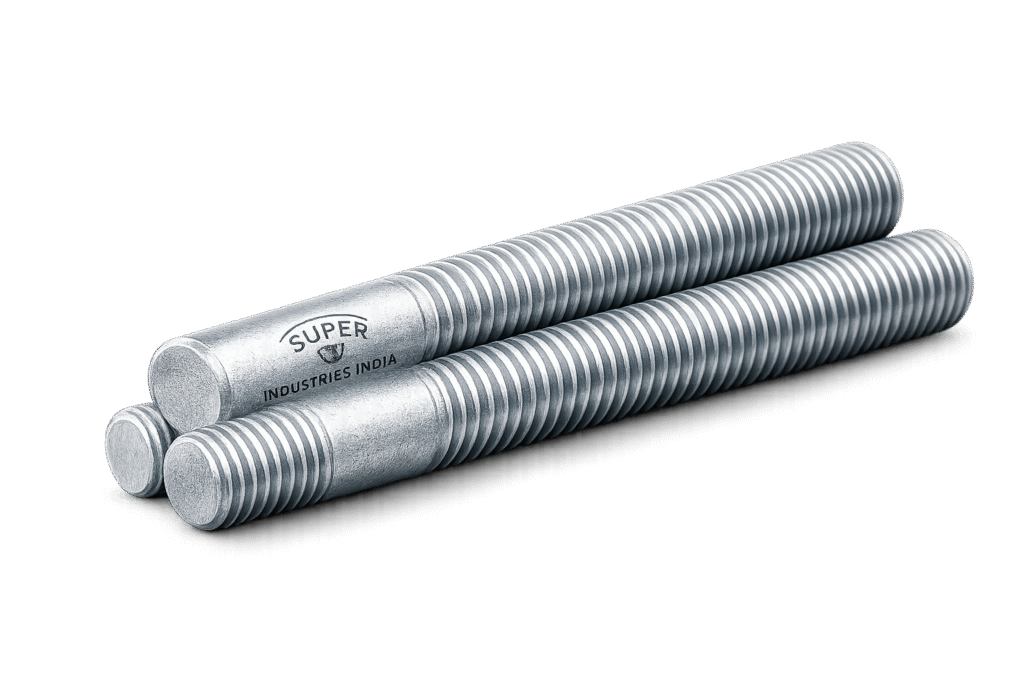
Why HDG Threaded Rods Are Critical in EPC, Structural, and Outdoor Infrastructure Projects
In EPC, infrastructure, and heavy industrial construction, threaded rods are frequently used as load-carrying and positioning elements rather than simple fastening hardware. Typical applications include:
- Structural steel connections
- Pipe racks and equipment supports
- Anchor rods embedded in concrete
- Outdoor skid systems and modules
- Cable trays, platforms, and walkways
In these environments, corrosion exposure is not incidental—it is a design condition. Atmospheric moisture, industrial pollutants, coastal salinity, cyclic wet-dry conditions, and UV exposure rapidly degrade unprotected carbon steel.
Hot Dip Galvanized (HDG) Threaded Rods are specified when EPC engineers require:
- Long-term corrosion resistance without maintenance
- Predictable service life in outdoor or semi-exposed locations
- Robust coating integrity suitable for handling, installation, and transport
- Compliance with international galvanizing standards
HDG threaded rods are therefore structural fastening components, not commodity items.
2. Technical Definition
What Are Threaded Rods and Where HDG Coating Is Required
Threaded rods are cylindrical steel rods with continuous or partial external threading, designed to be used with nuts and washers to provide adjustable axial clamping or anchoring.
They differ from bolts in that:
- There is no forged head
- Load distribution is achieved through nut positioning
- Length can be customized for site-specific geometry
Hot Dip Galvanized Threaded Rods are threaded rods that have undergone immersion galvanizing, where the finished steel rod is coated with molten zinc, forming a metallurgically bonded protective layer.
HDG coating is specified when:
- The rod is exposed to outdoor or corrosive atmospheres
- Long service life is required without repainting
- Coating durability is more critical than cosmetic appearance
3. Engineering Role of Hot Dip Galvanizing
Corrosion Protection and Coating Metallurgy
Hot dip galvanizing is not a surface paint or plating. It is a diffusion-based metallurgical process.
Zinc–Iron Alloy Layers
During galvanizing:
- Clean steel reacts with molten zinc (~450 °C)
- A series of zinc–iron alloy layers form
- An outer layer of pure zinc provides sacrificial protection
These layers provide:
- Barrier protection against moisture and oxygen
- Cathodic protection if coating is locally damaged
Service Life Extension
In typical industrial environments, HDG coatings can provide:
- 20–40+ years of protection depending on zinc thickness and exposure class
For EPC projects, this aligns with asset design life expectations.
4. HDG Weight & Dimensional Impact
Effect of Zinc Thickness on Mechanical and Installation Behavior
Hot dip galvanizing adds mass and thickness to threaded rods. This has several engineering implications.
Thread Fit
- Zinc builds up on thread flanks and crests
- Standard practice is to oversize or chase threads after galvanizing, or use tapped oversize nuts
Assembly Torque
- Increased friction coefficient compared to black steel
- Torque values must be adjusted accordingly
- Lubrication practices must consider zinc compatibility
Weight Calculations
- Zinc coating contributes additional weight
- Relevant for:
- Structural load calculations
- Transportation and lifting plans
- Anchor rod design in concrete
5. Weight Determination Logic
The total weight of an HDG threaded rod is determined by:
- Nominal diameter
- Finished length
- Base steel density
- Zinc coating thickness (typically 70–100 µm depending on standard)
- Thread form and pitch
- Manufacturing tolerances
For EPC documentation, weight calculations must clearly distinguish between:
- Bare steel weight
- Galvanized finished weight
6. Types of HDG Threaded Rods & Characteristics
Fully Threaded Rods
- Continuous threading along full length
- Maximum adjustability
- Common in structural and support systems
Double-End Threaded Rods
- Threaded ends with plain shank in between
- Used where mid-section corrosion exposure is limited
Custom-Length Anchor Rods
- Often supplied with:
- Chamfered ends
- Template nuts
- Washers
- Used in foundations and civil works
Each type must be evaluated for coating continuity, especially at cut ends and chamfers.
7. Material & Standard Alignment
Base Material Standards
Common materials include:
- ASTM A307 – general structural applications
- ASTM A36 – anchor rods and civil use
- ASTM A193 – higher strength or temperature applications (limited galvanizing compatibility must be checked)
Galvanizing Standards
- ASTM A123 – HDG for fabricated steel items
- ASTM A153 – HDG for fasteners
- ISO / EN equivalents applied for export projects
Material selection must consider:
- Zinc adhesion behavior
- Hydrogen embrittlement risk (especially for high-strength steels)
8. Manufacturing & Galvanizing Discipline
Manufacturing Sequence
- Raw material inspection
- Thread rolling or cutting
- Dimensional verification
- Pickling and surface preparation
- Fluxing
- Hot dip galvanizing
- Cooling and inspection
Galvanizing Control Parameters
- Bath temperature
- Immersion time
- Withdrawal speed
- Zinc chemistry
Quality Controls
- Coating thickness measurement
- Visual inspection for runs, bare spots, ash inclusions
- Thread fit verification
HDG threaded rods require process coordination between fastener manufacturing and galvanizing operations.
9. Procurement, Installation & Inspection View
EPC Procurement Verification
- Correct diameter and length
- Applicable base material standard
- Galvanizing standard compliance
- Coating thickness reports
- Thread compatibility with nuts
Installation Considerations
- Use of galvanized or compatible nuts
- Controlled torque application
- Avoidance of mechanical damage to coating
Inspection Focus
- Coating continuity
- Thickness compliance
- Thread engagement quality
- Traceability and documentation
10. Application Mapping
HDG Threaded Rods are extensively used in:
- Oil & Gas: pipe racks, supports, outdoor skids
- Power: substations, cooling systems, auxiliary steel
- Petrochemical & LNG: exposed structural assemblies
- Hydrogen: corrosion-sensitive outdoor installations
- Infrastructure: bridges, platforms, civil anchors
Their selection directly affects asset durability and maintenance planning.
11. Professional Technical Tables
Diameter & Length Ranges
| Diameter | Typical Length Range |
|---|---|
| M12 – M36 | Up to 6 m |
| ½” – 2” | Up to 20 ft |
HDG Threaded Rod – Weight Logic (Indicative)
| Parameter | Influence |
|---|---|
| Diameter | Major |
| Length | Linear |
| Zinc Thickness | Moderate |
| Thread Pitch | Minor |
(Exact weight charts are prepared per diameter and length for EPC BOQs.)
Coating Thickness vs Environment
| Environment | Typical Zinc Thickness |
|---|---|
| Industrial outdoor | ≥ 85 µm |
| Coastal / aggressive | ≥ 100 µm |
Material Grades vs Application Suitability
| Material | Typical Use |
|---|---|
| A307 | Structural supports |
| A36 | Anchor rods |
| A193 (selected grades) | Special EPC cases |
Customization Options
- Non-standard lengths
- Thread tolerances for HDG fit
- Project-specific documentation packs
- Marking and packaging control
12. Manufacturer-Focused Conclusion
Dip Galvanized (HDG) Threaded Rods are not generic construction items. They are engineered structural fastening elements whose performance depends on:
- Correct material selection
- Controlled thread geometry
- Metallurgically sound zinc coating
- EPC-aligned inspection and traceability
Super Industries supplies HDG threaded rods with:
- Process-controlled galvanizing
- Thread compatibility discipline
- Dimensional and weight transparency
- Documentation acceptable to EPC consultants and inspectors
The outcome is predictable corrosion performance and mechanical reliability in demanding project environments.
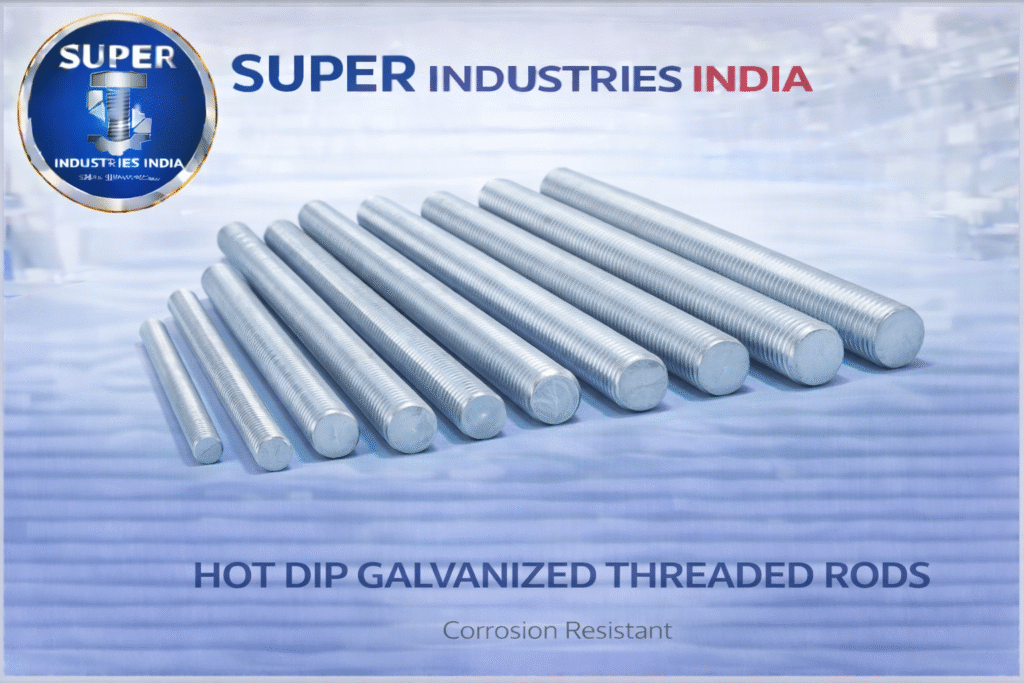
Unmatched Durability: Your Source for Hot Dip Galvanized (HDG) Threaded Rods in India
Welcome to Super Industries India, your trusted manufacturer and supplier of Hot Dip Galvanized (HDG) Threaded Rods and industrial fasteners across India. When your project demands fastening solutions with maximum protection against corrosion and the elements, standard fasteners simply won’t suffice. Our HDG threaded rods provide the superior strength and corrosion resistance essential for longevity in harsh environments, from coastal areas to chemical processing plants.
A Hot Dip Galvanized Threaded Rod is more than just a fastener; it’s a long-term investment in structural integrity. By immersing finished steel rods in molten zinc, we create a durable, multi-layered coating that stands up to rust and abrasion far better than paint or electroplating.
Why Choose Hot Dip Galvanized (HDG) Rods? The Superiority of Zinc Coating
The process of Hot Dip Galvanizing creates a metallurgical bond between the steel and the zinc, forming layers of zinc-iron alloys that are harder than the base steel itself. This distinct feature provides two key advantages unmatched by other coatings:
1. Exceptional Corrosion Resistance (Barrier and Sacrificial)
- Barrier Protection: The zinc coating physically isolates the steel from the corrosive environment, preventing water and oxygen from reaching the metal surface.
- Sacrificial Protection (Cathodic Protection): If the coating is scratched or damaged, the surrounding zinc sacrifices itself (corrodes) before the underlying steel, effectively “healing” minor damage and ensuring rust does not spread. This is crucial for threaded components that are often stressed and handled during installation.
2. Abrasion and Impact Resistance
The dense, crystalline structure of the zinc-iron alloy layers makes the HDG finish highly resistant to mechanical damage during transport, installation, and throughout its service life. This resilience is vital in construction and heavy industry where components are subject to wear.
Key Applications and Industry Use Cases for HDG Threaded Rods
As a prominent HDG Threaded Rod Supplier in India, we cater to sectors where fasteners must withstand relentless exposure to moisture, salt, and temperature fluctuations.
| Industry | Primary Application | Environmental Challenge |
| Infrastructure & Construction | Anchoring, formwork, suspension of heavy equipment, foundation bolting. | Rain, humidity, variable temperatures, high structural loads. |
| Solar & Renewable Energy | Securing solar panel mounting structures and arrays. | Direct sunlight, extreme weather, coastal salt spray (near the sea). |
| Telecommunications | Guy wires, bracing, and anchoring for cellular towers and masts. | High altitude, wind, and severe weather exposure. |
| Petrochemical & Oil & Gas | Pipe supports, racks, and non-flange industrial joining in outdoor plants. | Exposure to mild chemicals and corrosive atmosphere. |
| Marine & Coastal Projects | Docks, boardwalks, and structures near saltwater. | Severe salt-laden air and moisture, accelerating corrosion. |
Technical Specifications and Quality Compliance
Our commitment to quality ensures that every HDG All Thread Rod meets stringent international and American standards. We manufacture rods that offer precise threading, reliable mechanical properties, and guaranteed coating thickness.
Base Material and Standards
- Material: Our rods are typically manufactured from high-strength steel grades such as ASTM A193 B7 (for high-temperature/pressure applications) or ASTM A307/A36 (for general-purpose and structural applications).
- Threading: We offer rods with precise Metric (M6 to M100) and Imperial (1/4″ to 4″) threading, including UNC, UNF, and 8UN series.
- Dimensional Standard: Compliance with standards like ASME B18.31.3 for continuous thread studs and DIN 975/976.
Galvanizing Specification
The Hot Dip Galvanization process is performed strictly in accordance with ASTM A153 and/or ASTM F2329 standards, which specify the thickness, uniformity, and adherence of the zinc coating.
| Specification | Requirement | Importance |
| Coating Thickness | Minimum zinc thickness must meet A153/F2329 requirements. | Directly correlates to the lifespan of the corrosion protection. |
| Post-Galvanizing Treatment | Threads are cleaned and often “chased” (re-threaded) to accommodate the required zinc thickness and ensure seamless nut fit. | Ensures smooth assembly with Oversized Tapped Nuts (ASTM A563 Grade DH, HDG), which are always recommended for HDG bolts. |
Why Partner with Super Industries India?
When sourcing your Hot Dip Galvanized Fasteners in Mumbai (or anywhere in India), choosing an experienced manufacturer is critical to ensure proper thread fit and coating quality—a common issue with poorly processed HDG products.
- Guaranteed Thread Fit: Our HDG threaded rods are processed with the utmost care, ensuring the final product threads are compatible with galvanized nuts, preventing binding or stripping. We supply the rod and the correctly oversized HDG nuts together.
- Custom Lengths and Diameters: Need a non-standard length for an anchor application? As a leading HDG Threaded Rod Manufacturer, we offer custom cutting and threading services up to 6 meters (20 feet) in a single piece.
- Comprehensive Certification: All our HDG rods come with complete documentation, including Mill Test Certificates (MTCs) for the base material and Galvanizing Certificates confirming adherence to ASTM A153/F2329 standards.
- Nationwide Supply: We efficiently supply HDG rods and bolts to major industrial hubs across India, including Chennai, Hyderabad, Delhi, and Ahmedabad.
Choose Super Industries India for HDG rods that deliver Maximum Corrosion Protection and the High Mechanical Strength your critical applications require.
Get a Quick Quote for your Hot Dip Galvanized Threaded Rods today!