
Titanium
Table of Contents
Engineering Material Reference for EPC, Capital Projects & Export Procurement
Manufacturer & Global Exporter: Super Industries
Website: https://superindustriesindia.in
1️⃣ Industry Context: Why Titanium Is a Strategic Material in EPC & Capital Projects
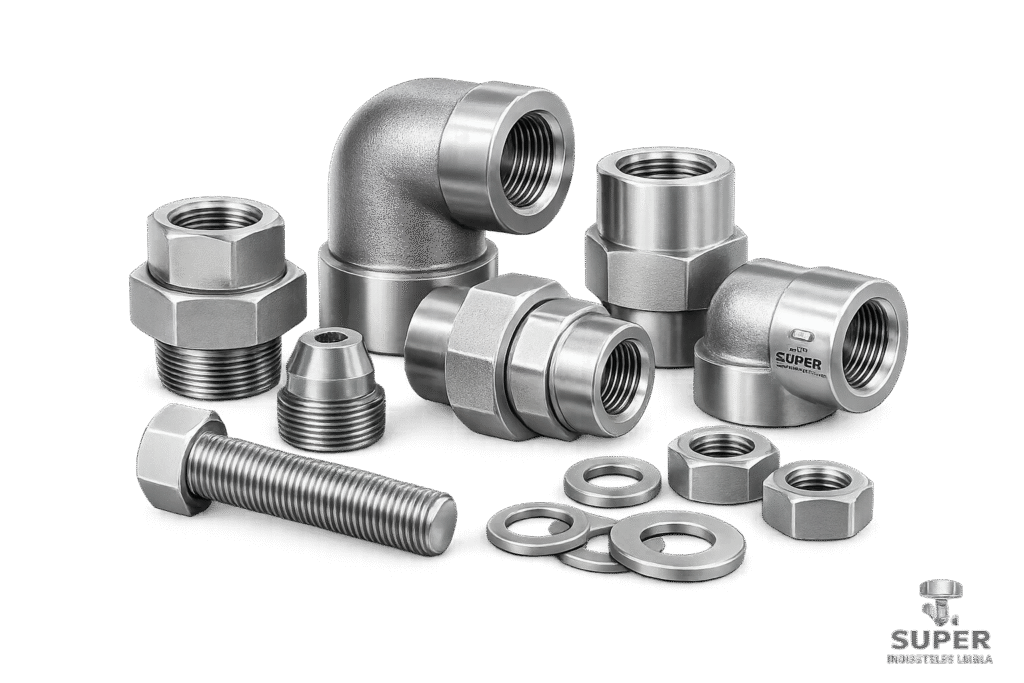
In modern EPC and capital-project execution, material selection is no longer driven solely by strength or availability. It is governed by lifecycle cost, corrosion risk, inspection exposure, weight reduction, and long-term reliability. Within this framework, Titanium ASTM B348 has emerged as a strategic engineering material across Oil & Gas, Power & Energy, Petrochemical, LNG, Hydrogen, Desalination, and critical Infrastructure projects.
Titanium is specified where conventional carbon steels, stainless steels, and even high-nickel alloys exhibit unacceptable limitations—particularly in environments involving:
- Chlorides, seawater, and brines
- Oxidizing acids and mixed chemical media
- High pressure combined with moderate-to-high temperatures
- Weight-sensitive structures and rotating systems
- Long design life with minimal maintenance access
For EPC contractors and consultants, Titanium is not a default choice; it is a risk-mitigation material, selected only when justified by corrosion modeling, inspection strategy, and total lifecycle economics. This page is structured to support those technical evaluations and consultant reviews.
2️⃣ Technical Definition: What Titanium Is and How It Differs from Other Alloys
Titanium is a metallic element with an atomic number of 22, characterized by a hexagonal close-packed (HCP) crystal structure at ambient temperature and a body-centered cubic (BCC) structure above 882°C. Its most defining metallurgical feature is the formation of a stable, adherent, and self-healing titanium oxide (TiO₂) passive layer, which provides exceptional corrosion resistance.
Key Metallurgical Characteristics
- Low density (~4.5 g/cm³), approximately 56% of carbon steel
- High melting point (~1668°C)
- Strong affinity for oxygen, nitrogen, and hydrogen at elevated temperatures
- Excellent resistance to uniform and localized corrosion in aggressive media
Titanium vs Stainless Steel
- Stainless steels rely on chromium oxide passivation, which can break down in chlorides
- Titanium’s oxide film is more stable and self-repairing
- Titanium is immune to chloride stress corrosion cracking (CSCC), a critical failure mode for austenitic stainless steels
Titanium vs Nickel Alloys
- Nickel alloys provide strength at very high temperatures but at higher density and cost
- Titanium offers superior corrosion resistance in many wet and chloride-rich services at significantly lower weight
3️⃣ Engineering & Material Performance Relevance
Strength-to-Weight Ratio
Titanium’s strength-to-weight ratio exceeds that of most structural metals. For EPC projects, this translates into:
- Reduced structural loads
- Lower foundation and support requirements
- Improved performance in dynamic and rotating systems
Corrosion Resistance
Titanium demonstrates near-immunity to:
- Seawater and marine atmospheres
- Hypochlorite and chlorinated systems
- Wet chlorine gas (below critical limits)
- Most oxidizing acids
This resistance directly reduces inspection frequency and corrosion allowance requirements.
Temperature Behavior
- Commercially pure grades perform well up to ~300°C
- Alloyed grades extend usable temperature ranges
- Not recommended for high-temperature reducing environments without careful assessment
Fatigue & Lifecycle Impact
Titanium exhibits excellent fatigue resistance, especially in corrosive environments where steels suffer accelerated crack initiation. This makes it suitable for long design-life components with limited access for replacement.
4️⃣ Titanium Grades & Alloy Classification
Titanium is broadly classified into Commercially Pure (CP) grades and Alloyed grades, each serving distinct engineering roles.
Commercially Pure Titanium (Grades 1–4)
- Increasing strength from Grade 1 to Grade 4
- Excellent corrosion resistance
- High ductility and formability
Alloyed Titanium Grades
- Grade 5 (Ti-6Al-4V): High strength, widely used structural alloy
- Grade 7: CP Titanium with Palladium addition for enhanced corrosion resistance
- Grade 12: Improved crevice corrosion resistance with moderate strength
5️⃣ Material Selection Logic
EPC engineers select Titanium grades based on a structured evaluation:
Pressure & Stress
- CP grades for low-to-moderate stress components
- Alloyed grades where higher allowable stresses are required
Corrosion Environment
- Grade 2 for seawater and general chemical service
- Grade 7 for reducing acids and crevice-prone systems
Temperature
- CP grades for ambient to moderate temperatures
- Alloyed grades for elevated-temperature service
Fabrication & Joining
- CP grades preferred where forming and welding complexity is high
- Alloyed grades where machining and controlled welding procedures are acceptable
6️⃣ Standards & Specification Alignment
Titanium materials for EPC projects are governed by internationally recognized standards:
Key Standards
- ASTM B348: Titanium bars and billets
- ASTM B381: Titanium forgings
- ASTM B265: Titanium plates and sheets
- ASME Section II: Pressure-retaining material acceptance
- EN 10204: Inspection and certification
- ISO standards: Dimensional and material harmonization
Compliance with these standards is mandatory for consultant approval and third-party inspection.
7️⃣ Manufacturing & Quality Discipline
Forging & Machining Control
Titanium requires controlled forging temperatures and machining parameters to avoid:
- Alpha-case formation
- Surface contamination
- Microstructural degradation
Heat Treatment
Heat treatment is performed under controlled atmospheres to prevent oxygen and hydrogen pickup, which can embrittle the material.
Contamination Control
Strict segregation from carbon steel tooling and environments is essential. Titanium contamination control is a key differentiator in EPC-approved manufacturing.
Traceability & Inspection
- Heat-wise traceability from melt to finished component
- Mechanical testing and chemical analysis
- Non-destructive examination where specified
8️⃣ Procurement, Installation & Inspection View
During Material Approval
Consultants verify:
- Grade selection and standard compliance
- Corrosion resistance justification
- Fabrication and welding procedures
During Inspection
Inspectors review:
- Chemical composition and mechanical properties
- Surface condition and contamination control
- Certification and traceability
During Installation
EPC teams ensure:
- Proper handling to avoid surface damage
- Compatible fasteners and gaskets
- Controlled welding and joining procedures
9️⃣ Application Mapping Across Industries
Oil & Gas
Offshore piping, heat exchangers, seawater systems.
Power & Energy
Condenser tubing, cooling systems, specialized fasteners.
Petrochemical
Reactors, columns, and aggressive chemical services.
LNG
Cryogenic and corrosion-sensitive components.
Hydrogen
Electrolyzers, piping, and corrosion-critical systems.
Desalination & Infrastructure
Evaporators, brine handling, and long-life structures.
🔟 Professional Technical Tables
Titanium Grades & Typical Composition
| Grade | Key Alloying Elements | Type |
|---|---|---|
| Grade 1 | Pure Ti | CP |
| Grade 2 | Pure Ti | CP |
| Grade 4 | Pure Ti | CP |
| Grade 5 | 6% Al, 4% V | Alloy |
| Grade 7 | Pd addition | Alloy |
| Grade 12 | Mo, Ni | Alloy |
Mechanical Properties (Indicative)
| Grade | Tensile Strength (MPa) | Yield Strength (MPa) |
|---|---|---|
| Grade 2 | ~345 | ~275 |
| Grade 4 | ~550 | ~485 |
| Grade 5 | ~895 | ~830 |
Corrosion Resistance vs Media
| Medium | Titanium Performance |
|---|---|
| Seawater | Excellent |
| Chlorides | Excellent |
| Oxidizing acids | Excellent |
| Reducing acids | Grade-dependent |
Typical Applications by Industry
| Industry | Titanium Use |
|---|---|
| Oil & Gas | Seawater piping |
| Power | Condenser tubes |
| Chemical | Reactors |
| Hydrogen | Electrolyzers |
Project-Specific Customization Options
| Parameter | Options |
|---|---|
| Grade | CP or alloyed |
| Product Form | Forgings, bars, fasteners |
| Surface Finish | Machined, pickled |
| Testing | Mechanical, NDT |
| Certification | EN 10204 3.1 / 3.2 |
Manufacturer-Focused Conclusion
In EPC and capital projects, Titanium is a materials-engineering decision, not a procurement shortcut. Its successful application depends on metallurgical understanding, contamination control, standard compliance, and disciplined manufacturing.
Super Industries supplies Titanium components under controlled forging, machining, and inspection systems aligned with international standards and EPC approval requirements. Our materials expertise, traceability discipline, and inspection readiness support consultant confidence, long-term reliability, and reduced lifecycle risk in critical applications.
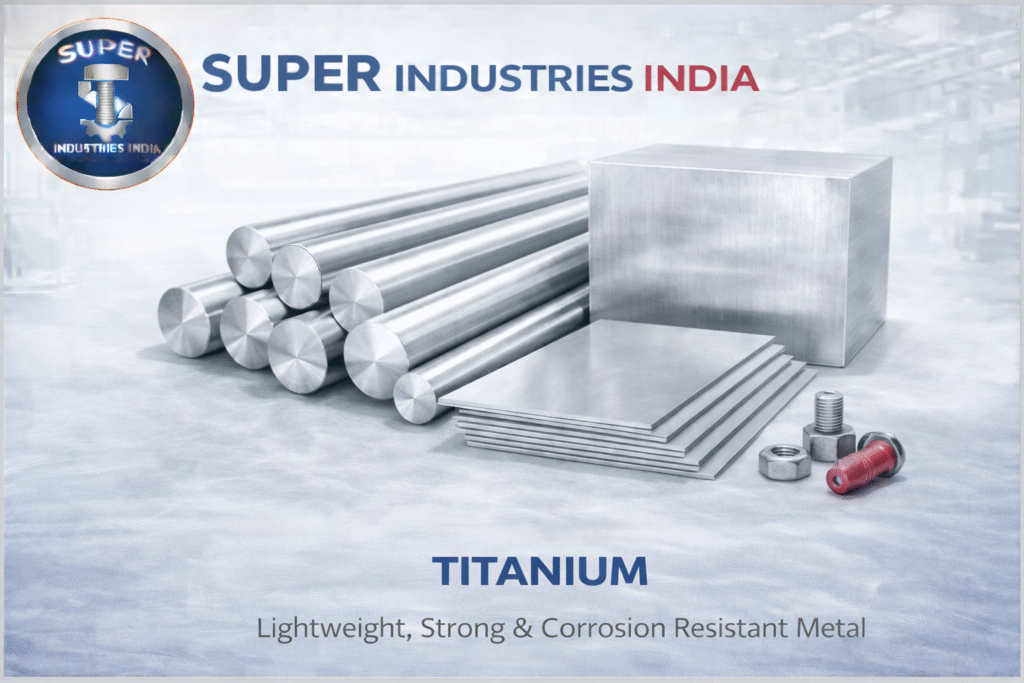
Lightweight Strength and Ultimate Corrosion Resistance: Titanium Fasteners ASTM B348
When the most severe industrial environments demand materials that are lightweight, supremely strong, and virtually immune to corrosion, only Titanium delivers. Super Industries India, a leading manufacturer and supplier of specialized fasteners in India, provides precision-engineered Titanium fasteners designed for the aerospace, medical, marine, and chemical industries. Our certified Titanium bolts, nuts, and custom components offer unparalleled performance where weight reduction and material longevity are mission-critical.
What is Titanium? The Metal of Extreme Performance
Titanium (Ti) is a transition metal celebrated for its extraordinary combination of properties that make it essential for advanced engineering:
- High Strength-to-Weight Ratio: Titanium boasts the highest strength-to-density ratio of any metallic element. It is approximately 45% lighter than steel but significantly stronger than aluminum alloys.
- Exceptional Corrosion Resistance: In the presence of oxygen, Titanium rapidly forms a thin, tough, and highly stable passive oxide layer ($\text{TiO}_2$). This layer is self-healing and provides near-total immunity to chlorides, seawater, and many aggressive chemical media.
- Biocompatibility: Titanium is non-toxic and compatible with human tissue, making it the standard material for medical implants.
- High-Temperature Performance: Maintains structural integrity and resistance to creep at high temperatures better than many aluminum alloys.
For industries in India and globally where every gram matters and failure is not an option, Titanium fasteners provide the ultimate performance upgrade.
Key Titanium Grades for Specialized Fasteners
The properties of Titanium can be tuned through alloying. At Super Industries India, we specialize in manufacturing fasteners from the most widely specified and reliable Titanium grades, primarily conforming to ASTM and AMS standards.
1. Commercially Pure Titanium (CP Ti) Grades
These grades are unalloyed, offering excellent ductility and outstanding corrosion resistance, but with slightly lower mechanical strength than alloyed grades.
- Titanium Grade 2 (CP Ti): The most common and versatile grade. It offers excellent corrosion resistance, ductility, and good weldability.
- Ideal for: Chemical processing, heat exchangers, and non-critical structural marine fasteners.
2. Titanium Alloy Grades
These alloys are heat-treatable, offering vastly superior mechanical strength.
- Titanium Grade 5 (Ti-6Al-4V): This is the most popular and widely used titanium alloy globally. It is alloyed with $6\%$ Aluminum and $4\%$ Vanadium.
- Properties: Offers exceptional strength, good creep resistance, and fracture toughness. It is heat-treatable to high strength levels.
- Ideal for: Aerospace structural components, high-performance racing, and high-stress medical implants.
- Titanium Grade 7 (Ti-0.2Pd): This alloy has a small addition of Palladium.
- Properties: Possesses corrosion resistance superior to Grade 2, particularly in reducing acids and environments where crevices exist.
- Ideal for: Extremely corrosive chemical plant equipment and environments prone to crevice corrosion.
Manufacturing Standards and Performance Assurance
Manufacturing Titanium fasteners is highly specialized due to the metal’s tendency to gall (cold-weld) and its unique machining properties. Super Industries India utilizes state-of-the-art machinery and specialized techniques to ensure optimal final product quality.
Key Compliance and Certifications
Our Titanium fasteners are manufactured and certified to meet the most stringent international standards:
- ASTM B348: Standard specification for Titanium and Titanium Alloy Bars and Billets (raw material).
- ASTM F467 / F468: Covers nonferrous nuts and bolts, ensuring dimensional and mechanical compliance.
- AMS Specifications: Critical for Aerospace applications, guaranteeing materials meet the highest performance and safety standards.
- Biocompatibility: For medical and food applications, we ensure materials meet necessary purity and non-toxicity standards.
Titanium Fastener Product Range:
We supply custom and standard Titanium components ready for extreme service:
- Titanium Hex Bolts & Cap Screws: Available in Gr 2 and Gr 5 for both corrosion resistance and high strength.
- Titanium Stud Bolts & Threaded Rods: Used extensively in chemical tanks and offshore connections.
- Titanium Heavy Hex Nuts: Designed to prevent galling through the use of anti-galling coatings or specialized thread forms.
- Custom Titanium Machined Parts: Manufactured to exact client drawings for specialized applications where minimal weight is crucial.
Titanium Fasteners: Securing India’s High-Tech Future
As a specialized Titanium Fastener Supplier in India, Super Industries India supports the nation’s most technologically advanced and demanding sectors. Our components are vital for maximizing efficiency, reducing weight, and ensuring long-term material survival in:
- Aerospace & Defense: Structural bolting, engine components, and airframe construction where weight savings directly translate to fuel efficiency.
- Medical & Surgical: Implants, instruments, and device fasteners due to Titanium’s biocompatibility and non-magnetic properties.
- Marine & Offshore: Fasteners for subsea equipment and vessel components where seawater corrosion is relentless.
- Chemical Processing: Equipment handling chlorine, wet chlorine gas, sodium hypochlorite, and other highly aggressive chemicals.
Need high-performance, lightweight, and corrosion-resistant Titanium fasteners (Grade 5 or Grade 2)?
Contact Super Industries India today for expert technical advice and a competitive quote on certified Titanium fastening solutions.