
COATED FASTENERS
EPC-Grade Corrosion Control for Capital Projects & Export Applications
Manufacturer & Global Exporter: Super Industries
Website: https://superindustriesindia.in
Industry Context
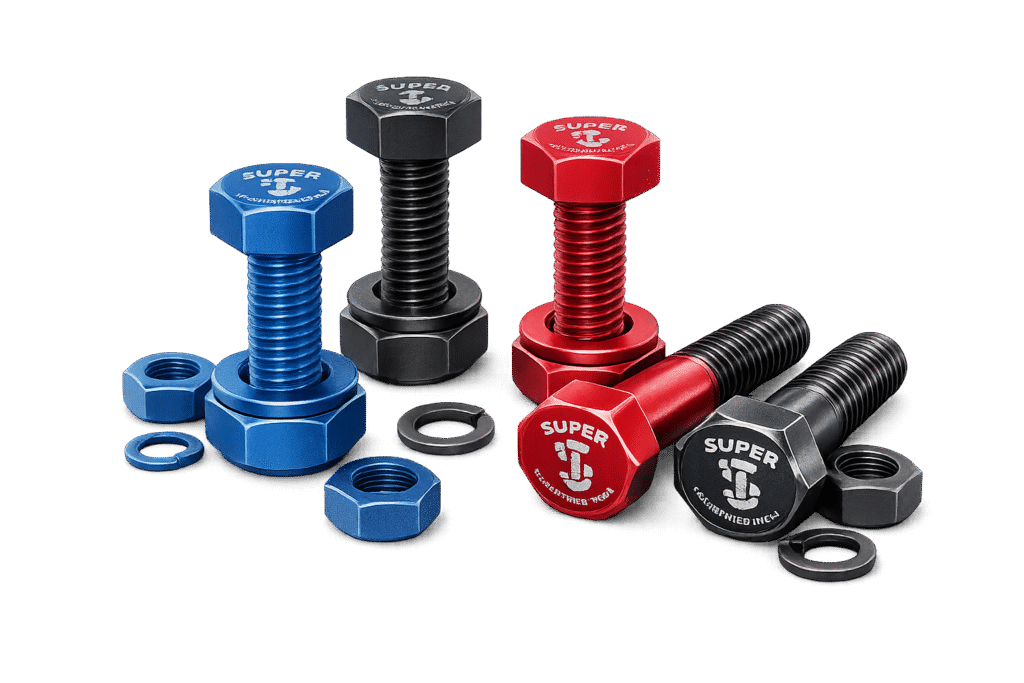
Why Coated Fasteners Are Critical in EPC Projects
In EPC and capital-project environments, fasteners are frequently the first components to exhibit degradation—not because of inadequate base material strength, but due to environmental exposure and surface interaction failures. Uncoated or incorrectly coated fasteners accelerate corrosion at joints, induce galling during installation, disrupt preload control, and compromise long-term service integrity.
Coated Fasteners address these risks at the interface where base material alone is insufficient. In Oil & Gas, Power & Energy, Petrochemical, LNG, Hydrogen, and Infrastructure projects, coatings are selected to achieve predictable corrosion performance, torque consistency, and inspection compliance across the asset lifecycle.
In EPC procurement, coated fasteners are evaluated as engineered systems, not commodities. The coating choice influences:
- Service life and maintenance intervals
- Installation torque accuracy and scatter
- Hydrogen embrittlement risk
- Compatibility with mating materials and washers
- Acceptance by consultants and third-party inspectors
Technical Definition
What Are Coated Fasteners?
Coated Fasteners are bolts, nuts, studs, washers, and threaded components that receive a controlled surface layer—applied after base material manufacture—to modify surface behavior without altering the bulk mechanical properties.
It is critical to distinguish among:
- Coating: A deliberately engineered layer (e.g., PTFE, epoxy, Geomet) providing corrosion protection and friction control.
- Plating: Typically metallic (e.g., zinc electroplating) primarily for corrosion resistance and appearance.
- Surface Treatment: Processes such as phosphating or passivation that modify surface chemistry rather than adding significant thickness.
In EPC specifications, these terms are not interchangeable. Misclassification can result in inspection rejection.
Engineering Purpose of Coatings
Corrosion Resistance
Coatings act as:
- Barrier layers against moisture, chlorides, and chemicals
- Sacrificial protection (in zinc-based systems)
- Chemically inert shields (in fluoropolymer systems)
Galling Prevention
Stainless and high-alloy fasteners are prone to adhesive wear. Low-friction coatings reduce:
- Thread seizure
- Installation damage
- Rework during assembly
Torque Control
Coating friction coefficients directly affect:
- Torque-tension relationship
- Achieved preload
- Scatter between fasteners
EPC bolting procedures often assume a defined friction range based on coating type.
Chemical Compatibility
Coatings are selected to resist:
- Hydrocarbons
- Sour service environments
- Acids, alkalis, and solvents
Lifecycle Extension
Correctly specified coatings extend:
- Inspection intervals
- Replacement cycles
- Asset reliability in aggressive environments
Coating Selection Logic
Selection is an engineering decision, not a commercial preference.
Key variables include:
- Environmental exposure (C2–C5, marine, offshore)
- Operating temperature range
- Preload accuracy requirements
- Hydrogen embrittlement sensitivity
- Inspection and testing criteria
Incorrect selection typically results in:
- Premature red rust or white corrosion
- Torque misapplication
- Coating delamination
- Rejection at site inspection
Types of Coated Fasteners & Characteristics
Zinc Plated
- Electroplated zinc with optional passivation
- Moderate corrosion resistance
- Controlled thickness
- Hydrogen embrittlement risk must be managed
Hot-Dip Galvanized (HDG)
- Thick zinc coating applied by immersion
- High corrosion resistance
- Dimensional impact on threads
- Common in structural and infrastructure applications
PTFE / Xylan Coated
- Fluoropolymer-based systems
- Low friction, high chemical resistance
- Excellent torque consistency
- Used in bolting for pressure and corrosive service
Dacromet
- Zinc-aluminum flake coating
- No hydrogen embrittlement
- Thin, uniform application
- Suitable for high-strength fasteners
Geomet
- Chromium-free zinc flake system
- Environmentally compliant
- Stable friction coefficients
- Widely accepted in EPC specifications
Epoxy Coated
- Thick polymer barrier
- Excellent chemical resistance
- Limited temperature range
- Often specified for buried or immersed service
Phosphate Coated
- Conversion coating
- Improves lubricant retention
- Not a standalone corrosion barrier
Standards & Compliance Alignment
Coated fasteners in EPC projects must align with:
- ASTM coating specifications (e.g., ASTM F1136, A153)
- ISO and DIN equivalents for thickness and performance
- Project-specific coating qualification procedures
Consultants verify:
- Coating type and class
- Thickness measurement records
- Adhesion and curing compliance
- Compatibility with base material grade
Manufacturing & Quality Discipline
Surface Preparation
Coating performance begins with:
- Controlled cleaning and degreasing
- Abrasive or chemical surface conditioning
Coating Application
- Uniform thickness control
- Controlled curing cycles
- Avoidance of thread fill and blockage
Thickness Control
- Measured using calibrated gauges
- Verified against specification tolerances
Adhesion & Integrity
- Visual inspection
- Mechanical adhesion testing where specified
Traceability
- Batch identification linked to coating process
- Heat number and MTC continuity
Procurement, Installation & Inspection View
What EPC Engineers Verify
- Coating specification compliance
- Friction coefficient assumptions
- Hydrogen embrittlement mitigation (where applicable)
What Inspectors Check
- Visual coating integrity
- Thickness measurement records
- Damage during transport or installation
Installation Considerations
- Lubrication compatibility
- Torque values adjusted for coating
- Handling to prevent coating damage
Application Mapping
Coated fasteners are critical in:
- Oil & Gas processing facilities
- Power generation plants
- Petrochemical units
- LNG and Hydrogen infrastructure
- Offshore and marine structures
- Civil and industrial infrastructure
In many EPC contracts, coating selection is mandated by project corrosion philosophy.
Professional Technical Tables
Coating Types vs Service Environments
| Coating Type | Typical Environment |
|---|---|
| Zinc Plated | Indoor / mild outdoor |
| HDG | Outdoor / infrastructure |
| PTFE / Xylan | Corrosive / pressure service |
| Dacromet | High-strength fasteners |
| Geomet | EPC structural & mechanical |
| Epoxy | Buried / chemical exposure |
Thickness Ranges & Tolerances (Indicative)
| Coating | Typical Thickness |
|---|---|
| Zinc Plated | Thin |
| HDG | Thick |
| PTFE | Controlled thin |
| Dacromet / Geomet | Thin uniform |
Torque Coefficient Considerations
| Coating | Friction Behavior |
|---|---|
| Zinc Plated | Variable |
| HDG | High scatter |
| PTFE / Xylan | Low, consistent |
| Geomet | Controlled |
Material Compatibility Matrix
| Base Material | Compatible Coatings |
|---|---|
| Carbon Steel | All major systems |
| Alloy Steel | Dacromet / Geomet / PTFE |
| Stainless Steel | PTFE / passivation |
Project-Specific Coating Options
- Dual-layer systems
- Color-coded coatings for identification
- Custom friction targets
- EPC-approved coating qualifications
Manufacturer-Focused Conclusion
Coated Fasteners represent a convergence of metallurgy, surface engineering, and installation control. In EPC environments, coating performance is inseparable from:
- Joint reliability
- Inspection acceptance
- Lifecycle cost control
Super Industries approaches coated fasteners with process discipline and specification fidelity, ensuring:
- Coating systems are selected for service reality
- Application and curing are controlled
- Documentation supports consultant review
This engineering-led approach aligns with EPC expectations where surface integrity is as critical as mechanical strength.
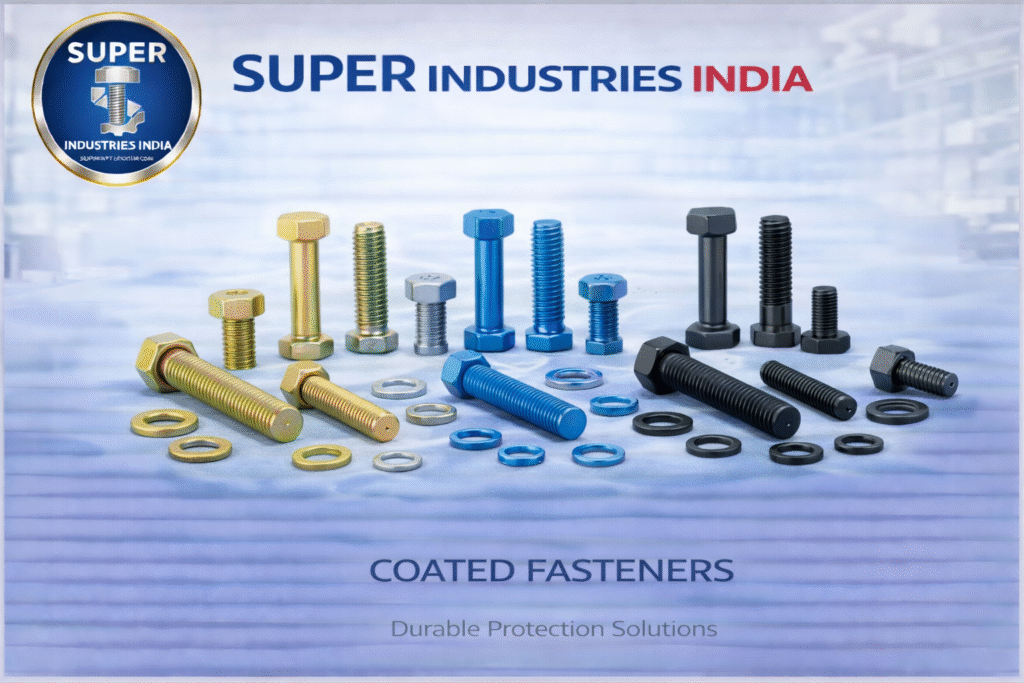
The Ultimate Guide to Coated Fasteners: Enhancing Durability and Performance for Indian Industries
Welcome to Super Industries India – your trusted partner for high-performance coated fasteners in India. In the demanding environments of modern industry, a standard fastener simply won’t suffice. The key to long-lasting structural integrity, reduced maintenance, and superior performance lies in selecting the right protective coating.
Coated fasteners are engineered components that feature a protective surface layer designed to significantly enhance their resistance to corrosion, wear, chemical exposure, and extreme temperatures. From the humid coastal regions to the challenging industrial zones across India, our specialized coatings ensure your assemblies stand the test of time.
Why Coated Fasteners are Essential for Your Projects
The primary function of a coating is to act as a shield, preventing environmental factors from degrading the base metal of the fastener (bolts, nuts, studs, washers, screws).
Core Benefits of Using Coated Fasteners
- Superior Corrosion Resistance: This is the most crucial benefit, especially in environments exposed to moisture, salt spray (marine/coastal), or aggressive chemicals (oil & gas, chemical processing).
- Extended Lifespan: By preventing rust and wear, coatings significantly prolong the service life of the fasteners, reducing the frequency and cost of replacement.
- Hydrogen Embrittlement Mitigation: Non-electrolytic coatings, like Zinc Flake, are crucial for high-strength steel fasteners (Grade 10.9, 12.9) where conventional plating risks brittle failure.
- Improved Assembly and Disassembly: Specialized coatings like PTFE/Xylan offer low-friction properties, ensuring smoother installation and easier, non-galling removal, even after years of service.
- Aesthetic and Identification Purposes: Coatings can provide specific colours (e.g., blue, green, black) for visual appeal or for quick identification of fastener grades/types in complex assemblies.
- Cost Efficiency: While the initial cost may be higher than uncoated fasteners, the longevity, reduced downtime, and lower maintenance costs translate into substantial savings over the project’s lifetime.
Exploring Top-Tier Fastener Coatings Offered by Super Industries India
Choosing the correct coating is paramount and depends entirely on the application and operating environment. Super Industries India offers a comprehensive range of leading protective finishes:
1. Hot-Dip Galvanizing (HDG)
| Feature | Detail | Ideal Applications |
| Description | Immersion in molten zinc, creating a thick, alloyed zinc layer. | Outdoor infrastructure, Highways, Bridges, Transmission Towers, Coastal Construction. |
| Benefits | Excellent, long-term sacrificial corrosion protection. Highly durable and robust for harsh outdoor use. | |
| Consideration | Adds significant thickness, requiring oversized tapped nuts (HDG nuts) to fit the bolts. |
2. Zinc Plating (Electro-Galvanizing)
| Feature | Detail | Ideal Applications |
| Description | Electroplated thin layer of zinc, often with a clear, blue, or yellow passivation finish. | Indoor/dry environments, light industrial, general machinery, automotive parts. |
| Benefits | Cost-effective, clean, bright finish, and offers moderate corrosion resistance. Minimal dimensional change. | |
| Consideration | Less resistant to outdoor or harsh chemical exposure than HDG or Fluoropolymer coatings. |
3. Fluoropolymer Coatings (PTFE / Xylan® / Teflon®)
| Feature | Detail | Ideal Applications |
| Description | A dry-film, non-stick fluorocarbon polymer coating, applied in various colours (e.g., Blue, Green). | Oil & Gas (Offshore/Onshore), Petrochemicals, Flange Connections, Chemical Processing. |
| Benefits | Superior chemical resistance, excellent lubrication/low-friction (anti-galling), high and low-temperature stability. | |
| Consideration | Primarily used for chemical/lubricity applications, though high-build versions offer excellent corrosion protection. |
4. Zinc Flake Coatings (e.g., Geomet®, Delta Protect®)
| Feature | Detail | Ideal Applications |
| Description | Non-electrolytic, water-based inorganic coating of zinc and aluminum flakes. | Automotive, Wind Energy, High-Tensile Structural Bolts (Grade 10.9 & 12.9). |
| Benefits | Eliminates Hydrogen Embrittlement risk in high-strength steels. Excellent salt spray resistance. Eco-friendly. | |
| Consideration | Requires specialized application equipment. Offers exceptional performance in demanding automotive and structural uses. |
5. Black Oxide and Phosphate Coatings
| Feature | Detail | Ideal Applications |
| Description | Chemical conversion coatings. Black Oxide provides a matte black finish; Phosphate improves paint/oil adhesion. | Aesthetic applications, indoor machinery, pre-treatment for painting. |
| Benefits | Minimal added thickness (good for tight tolerances), basic rust protection (Black Oxide often requires oil), excellent paint-bonding primer (Phosphate). | |
| Consideration | Offer only low to moderate corrosion resistance and are generally unsuitable for aggressive outdoor environments. |
Applications of Coated Fasteners Across Key Industries
The diverse and demanding industrial landscape of India requires application-specific fastener solutions. Our coated products are critical components in:
Oil & Gas and Petrochemical Industries
In environments with constant exposure to corrosive agents, high pressure, and temperature extremes, PTFE / Xylan® coated fasteners (especially Stud Bolts, Hex Nuts) are the standard choice due to their chemical resistance and anti-galling properties, ensuring secure and serviceable flange connections.
Construction and Infrastructure
For projects like bridges, metros, highway barriers, and general structural steelwork, Hot-Dip Galvanized (HDG) bolts and nuts provide the necessary heavy-duty corrosion protection required for a long service life in outdoor, high-humidity, or coastal areas.
Automotive and Heavy Machinery
High-tensile fasteners used in critical assemblies (e.g., engines, chassis) must be protected without risking brittle failure. Zinc Flake coatings are the preferred non-electrolytic solution, providing superior rust resistance while maintaining the structural integrity of high-strength components.
Marine and Offshore
Coastal and offshore applications involve the most severe corrosion challenge: salt water and spray. HDG and sometimes specialized ceramic coatings or Duplex/Super Duplex base materials with high-performance coatings are used to withstand the harsh marine environment.
Choose Super Industries India: Your Trusted Coated Fastener Supplier
At Super Industries India (superindustriesindia.in), we understand that a fastener is never “just a bolt.” It is a critical link in your most vital structures.
Why Partner with Us?
✔️ Quality Assurance: We adhere strictly to international standards (ASTM, ASME, DIN, ISO) and provide comprehensive material and coating certifications.
✔️ Custom Solutions: We offer fasteners in a wide range of materials (Carbon Steel, Alloy Steel, Stainless Steel, Duplex) and customize the perfect coating solution for your unique environmental challenges.
✔️ Made for India: Our expertise ensures the coatings are specifically optimized for the varied climatic and industrial conditions found across the Indian subcontinent.
Don’t compromise on structural integrity. Contact Super Industries India today to discuss your project requirements and let us provide you with the most reliable, corrosion-resistant coated fasteners available on the market.