Hydraulic System Design & Maintenance
Hydraulic System Design & Maintenance – Best Practices for Long-Term Performance
Industrial Hydraulic Expertise by Super Industries India
Introduction
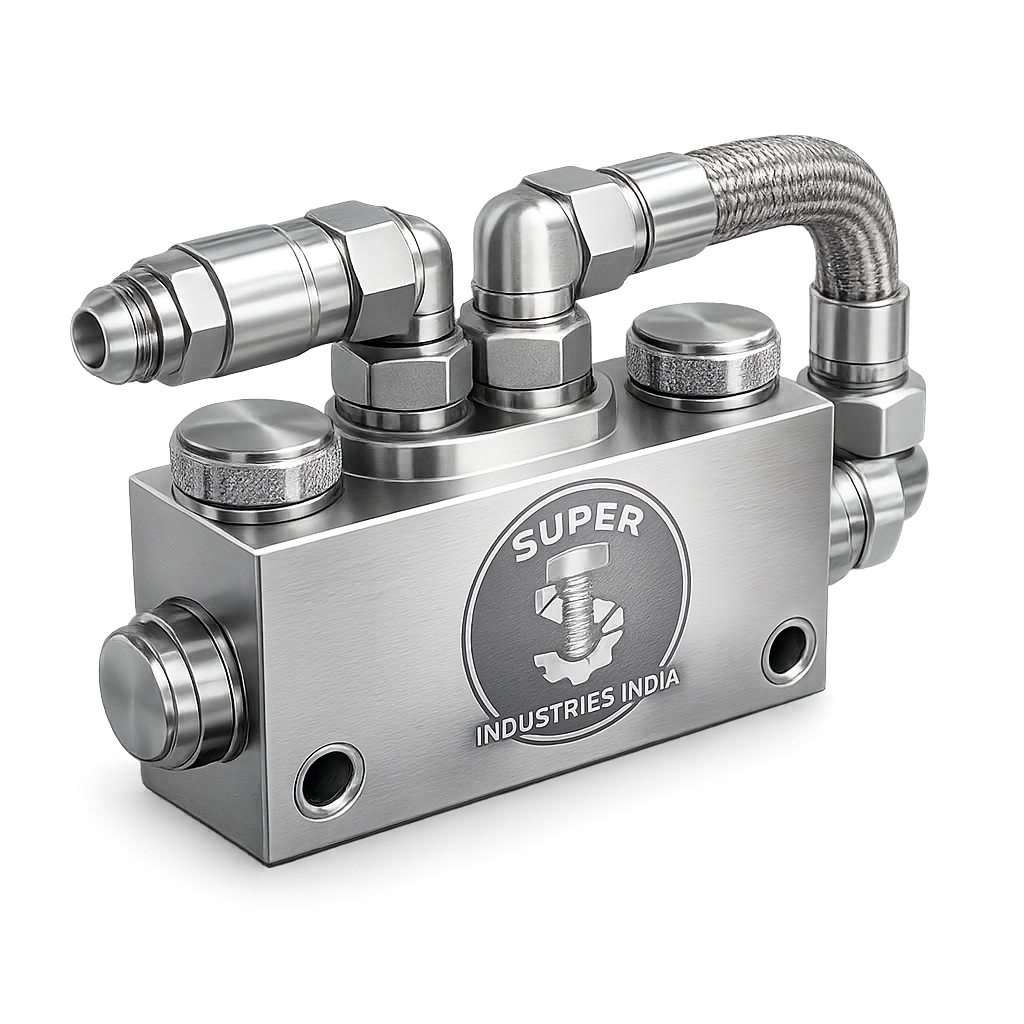
Hydraulic systems power some of the world’s most demanding industrial operations—from construction machinery and steel plants to oil & gas installations, marine systems, and heavy manufacturing units. While individual components such as pumps, cylinders, fittings, and valves are critical, the overall system design and maintenance strategy ultimately determines performance, safety, and lifecycle cost.
A well-designed hydraulic system operates efficiently with minimal downtime, while a poorly designed or poorly maintained system leads to energy losses, frequent breakdowns, fluid contamination, and safety hazards.
At Super Industries India, we work closely with global OEMs, hydraulic system integrators, and exporters by supplying precision hydraulic fittings, flanges, adapters, and tubes that support reliable system design and long-term maintenance.
This final guide covers hydraulic system design principles, component integration, maintenance practices, and lifecycle optimization strategies.
Super Industries
Global Manufacturer of Heavy & Custom Engineered Fasteners & Flanges
What Is a Hydraulic System?
A hydraulic system is an engineered arrangement of components that uses pressurized fluid to transmit power and perform mechanical work.
Core Functions
✔ Power transmission
✔ Force multiplication
✔ Controlled motion
✔ Load handling
Hydraulic systems are preferred in heavy-duty applications due to their high power density and precise control.
Core Components of a Hydraulic System
A typical hydraulic system includes:
1️⃣ Hydraulic power source (power pack)
2️⃣ Pumps
3️⃣ Valves
4️⃣ Actuators (cylinders or motors)
5️⃣ Hydraulic fittings & tubing
6️⃣ Filters & coolers
7️⃣ Control systems
Each component must work in harmony to ensure system reliability.
Key Principles of Hydraulic System Design
1️⃣ Define System Requirements Clearly
Before selecting components, define:
✔ Load requirements
✔ Operating pressure
✔ Flow rate
✔ Duty cycle
This ensures proper sizing and efficiency.
2️⃣ Pressure & Flow Optimization
Oversizing leads to:
❌ Excess heat
❌ Energy loss
Undersizing leads to:
❌ Performance failure
Correct pressure and flow balancing improves system longevity.
3️⃣ Component Compatibility
All components must be:
✔ Pressure-rated
✔ Fluid-compatible
✔ Temperature-resistant
Super Industries India supplies hydraulic fittings and tubes that match international standards for system compatibility.
Super Industries
Global Manufacturer of Heavy & Custom Engineered Fasteners & Flanges
4️⃣ Proper Hydraulic Line Routing
Well-routed hydraulic lines:
✔ Reduce pressure loss
✔ Prevent vibration damage
✔ Minimize leakage
Use proper clamps and supports to avoid fatigue failure.
5️⃣ Leak Prevention Strategy
Leaks reduce efficiency and create safety risks.
Best practices:
✔ Use correct fittings
✔ Apply proper torque
✔ Avoid mismatched threads
Role of Hydraulic Fittings in System Design
Hydraulic fittings connect components and maintain system integrity.
Key Requirements
✔ High pressure resistance
✔ Leak-free sealing
✔ Corrosion protection
Super Industries India manufactures and exports hydraulic fittings for demanding global applications.
Hydraulic Fluid Selection & Management
Fluid selection affects:
✔ Lubrication
✔ Heat transfer
✔ Seal life
Best Practices
✔ Use recommended viscosity
✔ Maintain cleanliness
✔ Monitor contamination
Thermal Management in Hydraulic Systems
Excess heat reduces component life.
Heat Control Methods
✔ Proper reservoir sizing
✔ Oil coolers
✔ Efficient component selection
Maintaining optimal temperature improves system reliability.
Hydraulic Filtration Strategy
Contamination is the leading cause of hydraulic failure.
Filtration Types
✔ Suction filters
✔ Pressure line filters
✔ Return line filters
Clean oil extends component life by up to 70%.
Hydraulic System Maintenance Best Practices
1️⃣ Preventive Maintenance
✔ Regular inspection
✔ Filter replacement
✔ Oil analysis
2️⃣ Predictive Maintenance
✔ Vibration monitoring
✔ Pressure trend analysis
✔ Temperature tracking
3️⃣ Corrective Maintenance
✔ Leak repair
✔ Component replacement
✔ System flushing
Common Hydraulic System Failures
❌ Leakage
❌ Overheating
❌ Contamination
❌ Cavitation
Most failures are preventable through proper design and maintenance.
Safety Considerations in Hydraulic Systems
✔ Pressure relief devices
✔ Emergency shutdowns
✔ Hose burst protection
Safety must be integrated into system design from the start.
Hydraulic System Optimization for Export Markets
Global markets demand:
✔ Compliance with international standards
✔ Reliable documentation
✔ Consistent quality
Super Industries India supports exporters with globally compatible hydraulic components.
Why Super Industries India Is a Trusted Hydraulic Partner
✔ Export-ready manufacturing
✔ International standards compliance
✔ Custom component support
✔ Long-term reliability focus
Conclusion
Hydraulic system design and maintenance are equally important. Even the highest-quality components cannot perform reliably without proper system integration and upkeep.
By following best design practices, selecting compatible components, and implementing proactive maintenance strategies, industries can achieve longer system life, lower operational costs, and improved safety.https://rrhydraulics.com/
As a trusted exporter and industrial partner, Super Industries India supports hydraulic systems worldwide with precision-engineered hydraulic fittings, flanges, adapters, and tubing designed for long-term performance.