
STRUCTURAL BOLTS
Super Industries
“Global Manufacturer of Heavy & Custom Engineered Fasteners for Oil & Gas, Power & EPC Contractors.”
Structural steel construction relies on mechanical fastening systems capable of transferring high loads safely between steel members. Among these fastening systems, Structural Bolts represent one of the most widely used and technically regulated fastener categories used in modern infrastructure, industrial plants, and heavy engineering structures.
1. Industry Context & Structural System Relevance
Structural Bolts in Steel Construction
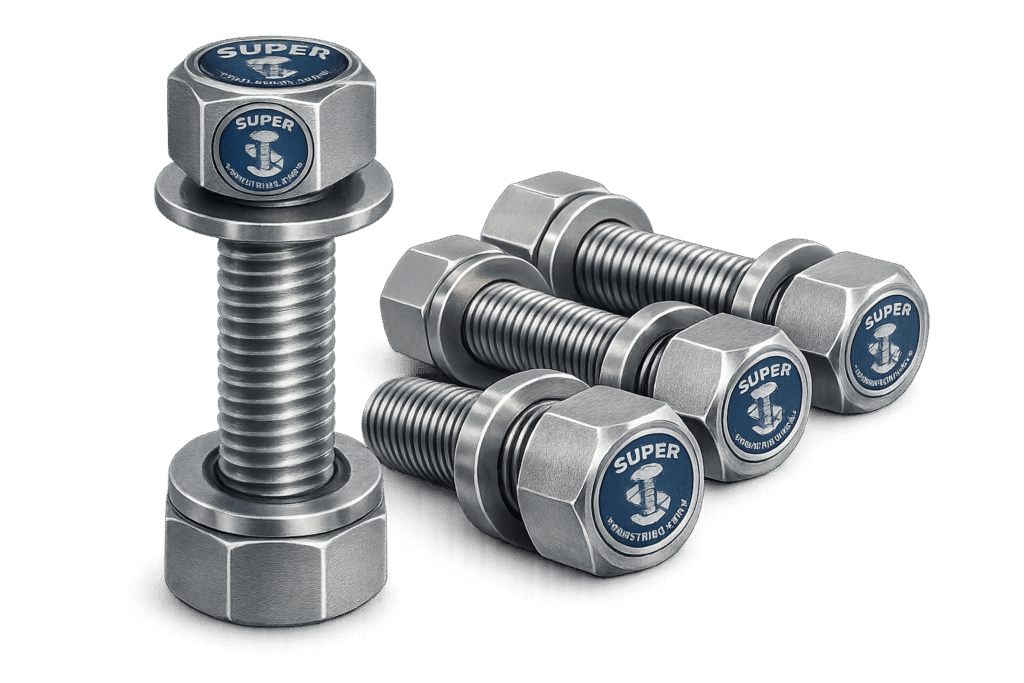
Modern structural engineering uses bolted connections extensively in steel construction. Structural steel frameworks consist of prefabricated beams, columns, gusset plates, splice plates, and connection brackets. These elements are assembled on site using structural bolting systems designed to handle high tension and shear loads.
Structural Bolts are used to join:
- Steel beams to columns
- Beam splice plates
- Column base plates
- Gusset plate connections
- Truss structures
- Structural frames for heavy equipment
Bolted connections allow steel structures to be assembled efficiently while maintaining the design load capacity required for safe structural performance.
Typical structural installations using Structural Bolts include:
Super Industries
Global Manufacturer of Heavy & Custom Engineered Fasteners & Flanges.
Steel Buildings
Multi-storey commercial buildings, industrial sheds, and warehouses frequently rely on structural bolting systems for primary steel connections.
Industrial Plant Structures
Process plants, refineries, and chemical facilities require large steel support frameworks for piping systems, process vessels, and equipment platforms.
Power Plant Steel Frameworks
Thermal power plants, gas turbine installations, and renewable energy facilities use structural bolting systems to assemble large steel structures supporting boilers, turbines, and auxiliary equipment.
Oil & Gas Platform Structures
Offshore platforms and onshore oil & gas facilities depend on heavy-duty structural bolting assemblies designed to withstand dynamic loading and environmental exposure.
Transmission Towers
High-voltage power transmission towers utilize thousands of structural bolts in lattice tower assemblies.
Bridges & Flyovers
Structural Bolts are essential components in bridge superstructures, connecting girders, truss members, and deck support systems.
Heavy Equipment Foundations
Industrial equipment such as crushers, mills, and turbines rely on steel support frames assembled with structural fasteners.
Offshore Support Structures
Marine structures require high-strength bolting systems capable of maintaining clamping force under dynamic loads and corrosive environments.
Structural Steel Fabrication
Steel fabricators routinely design bolted connections as part of prefabricated modules delivered to project sites.
Structural Bolts vs Standard Hex Bolts
Standard hex bolts are used widely in machinery and general fastening applications. However, structural steel joints impose higher design loads and stricter installation requirements. As a result, Structural Bolts differ significantly from general-purpose bolts.
Key differences include:
| Parameter | Structural Bolts | Standard Hex Bolts |
|---|---|---|
| Load Capacity | High tensile strength | Moderate strength |
| Head Design | Heavy hex head | Standard hex head |
| Joint Type | Steel structural connections | General fastening |
| Installation Method | Controlled pretensioning | Standard tightening |
| Inspection Requirement | Engineering inspection | Visual verification |
Structural Bolts are specifically engineered for:
- High-load structural joints
- Slip-critical connections
- Shear-critical steel assemblies
- High-tension bolted connections
These applications demand precise control over bolt preload, friction interface, and joint stiffness.
Structural Steel Connection Design
Structural engineers design connections between steel members to transfer loads safely between components.
Load transfer occurs through two primary mechanisms:
- Bearing-type connections
- Slip-critical connections
Bearing-Type Connections
In bearing connections, shear forces are transferred through contact between the bolt shank and the sides of the bolt hole.
Load transfer sequence:
- Bolt experiences shear force
- Bolt shank contacts plate edge
- Plate bearing transfers load between steel members
These connections are commonly used in structures where limited slip during loading is acceptable.
Slip-Critical Connections
Slip-critical connections are designed to prevent any relative movement between connected steel plates.
In these connections:
- Bolts are pretensioned to high preload levels
- Friction between steel plates resists applied loads
- Bolt tension creates clamping force across the joint
Slip-critical joints are commonly used in:
- Bridges
- Seismic structures
- Fatigue-sensitive connections
- Dynamic load structures
Bolted vs Welded Structural Joints
Structural assemblies can be joined using welding or bolting. Each method has advantages depending on design requirements.
| Parameter | Bolted Connection | Welded Connection |
|---|---|---|
| Installation Speed | Faster | Slower |
| Site Assembly | Easier | Requires welding equipment |
| Inspection | Visual + torque verification | NDT required |
| Replaceability | Replaceable | Permanent |
| Fatigue Behavior | Favorable | Depends on weld quality |
In many infrastructure projects, bolted connections are preferred for field assembly due to installation reliability and inspection accessibility.
High Strength Friction Grip (HSFG) Bolts
A major category of structural bolts is High Strength Friction Grip (HSFG) bolts.
HSFG bolts are designed to create a high clamping force between steel plates, generating friction that resists applied loads.
Key characteristics of HSFG bolts:
- High tensile strength
- Controlled bolt pretension
- Slip-resistant connection design
- Heavy hex head configuration
HSFG bolts are frequently specified in:
- Bridge construction
- Wind turbine towers
- High-rise structural frames
- Dynamic load environments
These bolts form part of structural bolting assemblies, typically consisting of:
- Bolt
- Heavy hex nut
- Hardened washer
2. Technical Definition of Structural Bolts
Engineering Definition
Structural Bolts are high-strength threaded fasteners designed specifically for structural steel connections, where reliable transfer of tension and shear loads is required.
These bolts are engineered to perform in load-bearing steel joints, where they maintain clamping force and structural stability under service loads.
Key characteristics include:
- High tensile strength
- Controlled mechanical properties
- Heavy hex head geometry
- Compatibility with structural nuts and washers
- Standardized dimensional requirements
Structural Bolts are used in steel-to-steel structural assemblies, including beam connections, splice plates, truss joints, and support structures.
Major Structural Bolt Standards
Structural Bolts are manufactured according to internationally recognized fastener specifications.
Common standards include:
ASTM A325 Structural Bolts
ASTM A325 bolts are high-strength structural bolts commonly used in steel construction.
Key features:
- Medium carbon steel construction
- Heat treated for high strength
- Used in bearing and slip-critical joints
These bolts are widely used in structural steel connections across infrastructure and industrial projects.
ASTM A490 High-Strength Structural Bolts
ASTM A490 bolts provide higher strength compared to A325 bolts.
Characteristics include:
- Alloy steel construction
- Higher tensile strength
- Designed for high-load structural applications
DIN 6914 Structural Bolts
DIN 6914 bolts are high-strength structural bolts used primarily in European steel construction standards.
They are designed for high-strength friction grip bolting systems and are used with compatible nuts and washers.
ISO 7412 High-Strength Bolts
ISO 7412 defines dimensions and properties for high-strength structural bolts used in heavy structural assemblies.
These bolts are typically used in international infrastructure projects that follow ISO structural standards.
Heavy Hex Structural Bolts
Structural bolts commonly feature a heavy hex head design.
Heavy hex heads provide:
- Increased wrenching surface
- Higher torque application capability
- Improved load distribution under the bolt head
These design characteristics allow structural bolts to maintain the pretension required for structural connections.
Structural Bolt Assembly Components
A complete structural bolting assembly typically includes three components:
- Structural Bolt
- Heavy Hex Nut
- Hardened Washer
Each component must meet the required mechanical properties specified in structural fastener standards.
Washers help distribute load and prevent embedment in steel surfaces, while nuts ensure proper thread engagement.
3. Structural Load & Fastening Principles
Structural bolts are engineered to transfer loads between steel members through controlled clamping force and shear resistance.
Understanding the load behavior of bolted connections is essential in structural design.
Load Transfer in Bolted Steel Joints
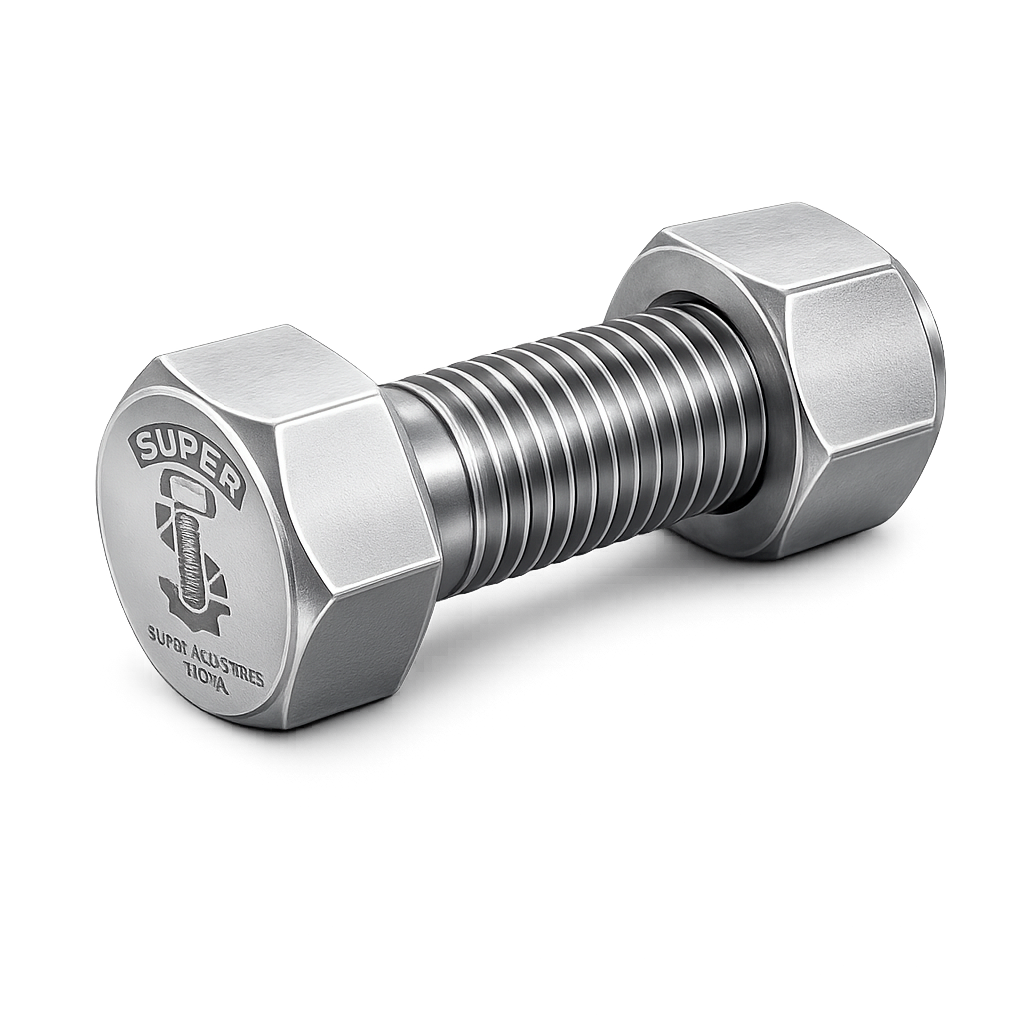
Steel joints assembled using structural bolts transfer loads through:
- Bolt tension
- Bolt shear
- Plate bearing
- Friction between plates
The connection design determines how these forces interact within the joint.
Shear Load Transfer
Shear loads occur when forces act parallel to the connection plane.
In structural joints:
- Load acts across the joint
- Bolt shank resists shear forces
- Plates transmit load through bearing
Shear capacity depends on:
- Bolt diameter
- Bolt material strength
- Number of bolts in the joint
Bolt Tension in Clamped Connections
Structural bolts are tightened to generate preload tension, which clamps steel plates together.
This clamping force increases joint stiffness and prevents separation between plates.
The bolt experiences tensile stress along its axis when tightened.
Proper bolt tension ensures:
- Stable load distribution
- Reduced joint movement
- Improved fatigue resistance
Friction Grip Mechanisms
In slip-critical joints, friction between steel plates prevents movement.
The friction force depends on:
- Bolt preload
- Surface condition of steel plates
- Friction coefficient
The frictional resistance is calculated as:
Friction Force = Bolt Preload × Friction Coefficient
This mechanism allows loads to be transferred without bolt shear.
Bolt Pretension Requirements
Structural bolts must be tightened to a specified pretension level during installation.
Pretensioning ensures the bolt generates sufficient clamping force to resist applied loads.
Typical pretension levels depend on:
- Bolt diameter
- Bolt grade
- Structural design requirements
Pretension values are defined in structural design standards.
Bolt Pretensioning Methods
Several tightening methods are used to achieve proper bolt pretension.
Turn-of-Nut Method
In this method:
- Bolt is initially snug tightened
- Nut is rotated by a specified angle
- Bolt elongation generates required tension
This method is widely used in structural steel assembly.
Torque-Controlled Tightening
Torque wrenches apply a specific tightening torque to achieve desired bolt preload.
However, torque-based methods must account for friction variations in threads and washers.
Direct Tension Indicator (DTI) Washers
DTI washers provide visual confirmation of bolt tension.
These washers compress under load, allowing inspectors to verify proper bolt pretension.
DTI systems are commonly used in:
- Bridge construction
- Infrastructure projects
- Critical structural connections
Structural Joint Stiffness
Structural bolt pretension influences the stiffness of a bolted joint.
Higher pretension levels increase joint stiffness and reduce slip under load.
This improves:
- Structural stability
- Fatigue resistance
- Dynamic load performance
Joint stiffness is particularly important in structures exposed to:
- Wind loads
- Traffic vibration
- Seismic forces
4. Applicable Standards for Structural Bolts
Structural Bolts used in steel construction are produced according to international fastener standards that regulate mechanical properties, dimensional tolerances, and installation requirements.
These standards ensure compatibility between structural fasteners, structural steel design practices, and installation procedures used in infrastructure and industrial projects.
ASTM A325 — Structural Bolts
ASTM A325 is one of the most widely specified standards for structural steel bolting in North American infrastructure and EPC projects.
Key characteristics include:
- Medium carbon steel construction
- Heat-treated for increased mechanical strength
- Designed for structural steel connections requiring controlled bolt pretension
- Compatible with ASTM heavy hex nuts and hardened washers
ASTM A325 bolts are used in:
- Structural steel buildings
- Bridges
- Transmission towers
- Industrial support structures
Mechanical properties defined in the specification include:
- Minimum tensile strength
- Minimum yield strength
- Hardness range
- Thread tolerance
ASTM A490 — High Strength Structural Bolts
ASTM A490 bolts are high-strength alloy steel structural bolts designed for applications requiring greater load capacity than A325 bolts.
Key features:
- Alloy steel construction
- Higher tensile strength
- Heat-treated microstructure
- Designed for high-load structural joints
A490 bolts are commonly used in:
- Long-span bridges
- Offshore steel structures
- Industrial equipment frameworks
- High-rise steel construction
These bolts are typically not hot-dip galvanized, as hydrogen embrittlement may occur in high-strength alloy steels when exposed to certain plating processes.
ASTM F3125 — Structural Bolting Assemblies
ASTM F3125 consolidates several structural bolt specifications under a single framework for structural bolting assemblies.
This standard covers:
- Structural bolts
- Structural nuts
- Structural washers
The specification defines grades such as:
- A325
- A490
ASTM F3125 ensures that all components in the bolting assembly meet compatible strength and dimensional requirements.
DIN 6914 — High Strength Structural Bolts
DIN 6914 is a European standard covering high-strength bolts used in structural steel construction.
Key features include:
- High-strength bolt classification
- Compatibility with DIN 6915 nuts
- Use with DIN 6916 washers
- Application in High Strength Friction Grip (HSFG) assemblies
DIN structural bolts are widely used in:
- European bridge projects
- Wind turbine towers
- Industrial steel structures
ISO 7412 — High Strength Structural Bolts
ISO 7412 defines requirements for hexagon bolts used in high-strength structural bolting assemblies.
Characteristics include:
- Large heavy hex head geometry
- High-strength mechanical properties
- Compatibility with ISO structural nuts and washers
ISO standards are widely used in international EPC procurement where project specifications require standardized global fastener dimensions.
ISO 898-1 — Mechanical Properties of Fasteners
ISO 898-1 defines mechanical property classes for carbon steel and alloy steel fasteners.
The standard defines classes such as:
- Class 8.8
- Class 10.9
- Class 12.9
Mechanical properties specified include:
- Yield strength
- Tensile strength
- Elongation
- Hardness
These classes are frequently used in structural engineering where ISO metric fasteners are specified.
Influence of Standards on Structural Bolt Design
Fastener standards directly influence the design and manufacturing characteristics of structural bolts.
Key aspects regulated by standards include:
- Minimum mechanical strength
- Bolt head geometry
- Thread tolerance class
- Heat treatment requirements
- Marking and traceability
- Pretensioning requirements
Compliance with these standards ensures that structural bolts perform predictably in load-bearing steel connections.
5. Material & Grade Options
Material selection plays a critical role in determining the mechanical strength, fatigue resistance, and environmental durability of structural bolts.
Structural bolts are typically manufactured using high-strength carbon steel or alloy steel, although stainless steel may be used in certain corrosion-sensitive structural applications.
Carbon Steel Structural Bolts
Carbon steel remains the most common material used for structural bolts due to its balance of strength, cost, and manufacturability.
Typical grades include:
ASTM A325
Characteristics:
- Medium carbon steel
- Heat treated for strength
- Suitable for general structural steel connections
Typical applications:
- Building structures
- Industrial steel frameworks
- Transmission towers
ASTM A490
ASTM A490 bolts are manufactured from alloy steel and provide higher strength than A325 bolts.
Characteristics:
- Higher tensile strength
- Increased hardness
- Higher load-bearing capacity
Applications include:
- Bridge construction
- Offshore steel structures
- Heavy industrial assemblies
Alloy Steel Structural Bolts
Certain structural applications require bolts with enhanced strength and temperature resistance.
One commonly referenced grade is:
ASTM A193 B7
Features include:
- Chromium-molybdenum alloy steel
- High tensile strength
- High-temperature capability
These bolts are often used in:
- power generation facilities
- pressure equipment support structures
- heavy industrial installations
Stainless Steel Structural Bolts (Special Applications)
Although stainless steel bolts are not typically used in high-strength friction grip assemblies, they are sometimes specified where corrosion resistance is critical.
Common grades include:
ASTM A193 B8 (Type 304 Stainless Steel)
Properties:
- Good corrosion resistance
- Moderate mechanical strength
- Suitable for atmospheric exposure
Typical applications include:
- coastal structures
- architectural steel installations
ASTM A193 B8M (Type 316 Stainless Steel)
Features:
- Enhanced corrosion resistance
- Resistance to marine environments
- Improved resistance to chlorides
Applications include:
- offshore platforms
- marine infrastructure
- chemical processing plants
Material Comparison Table
| Grade | Yield Strength | Tensile Strength | Temperature Range | Corrosion Resistance | Typical Industry Use |
|---|---|---|---|---|---|
| ASTM A325 | ~660 MPa | ~830 MPa | −40°C to 300°C | Moderate | Structural steel buildings |
| ASTM A490 | ~940 MPa | ~1040 MPa | −40°C to 400°C | Moderate | Bridges, heavy structures |
| ASTM A193 B7 | ~720 MPa | ~860 MPa | −50°C to 450°C | Moderate | Industrial structures |
| ASTM A193 B8 | ~205 MPa | ~515 MPa | −200°C to 600°C | High | Coastal structures |
| ASTM A193 B8M | ~205 MPa | ~515 MPa | −200°C to 650°C | Very High | Marine structures |
6. Heat Treatment Engineering
Heat treatment is a critical manufacturing stage that determines the final mechanical properties of structural bolts.
The purpose of heat treatment is to achieve the required strength, hardness, and microstructural stability specified in structural fastener standards.
Quenching and Tempering
Most high-strength structural bolts undergo quenching and tempering.
This process involves:
- Heating the steel to austenitizing temperature
- Rapid cooling (quenching) in oil or water
- Reheating at controlled temperature (tempering)
The result is a tempered martensitic microstructure that provides:
- High tensile strength
- Good toughness
- Controlled hardness
Stress Relieving
Stress relieving may be applied after manufacturing processes such as forging or thread rolling.
Purpose:
- Reduce residual stresses
- Improve dimensional stability
- Reduce risk of distortion
Microstructure Control
Proper heat treatment ensures controlled grain structure within the bolt material.
Microstructural control improves:
- fatigue resistance
- load-bearing capability
- fracture resistance
Hardness Verification
Hardness testing is performed to verify compliance with fastener specifications.
Common hardness scales include:
- Rockwell Hardness (HRC)
- Brinell Hardness (HB)
Typical hardness ranges:
| Grade | Hardness Range |
|---|---|
| ASTM A325 | 24 – 34 HRC |
| ASTM A490 | 33 – 39 HRC |
| ASTM A193 B7 | 24 – 36 HRC |
Hardness testing ensures that bolts meet strength requirements without becoming excessively brittle.
Heat Treatment and Structural Performance
Correct heat treatment improves several critical properties:
- Structural load capacity
- Resistance to fatigue cracking
- Impact resistance
- Resistance to brittle fracture
These properties are essential in structures exposed to:
- wind loading
- traffic vibration
- seismic forces
7. Structural Bolt Manufacturing Process
The manufacturing process for structural bolts must maintain tight control over dimensional accuracy, thread quality, and metallurgical properties.
The typical manufacturing workflow involves multiple stages of inspection and process verification.
1. Raw Material Inspection
Production begins with inspection of incoming steel bar stock.
Material verification includes:
- chemical composition analysis
- mill test certification review
- dimensional inspection
Raw materials must meet the chemical composition requirements specified in fastener standards.
2. Hot Forging of Heavy Hex Head
The bolt head is formed using hot forging processes.
Forging provides:
- improved grain flow
- increased mechanical strength
- uniform material density
Heavy hex head geometry is formed in forging dies that define the wrenching dimensions.
3. Head Forming
After forging, the bolt head is shaped to achieve the required head height and hex profile.
Dimensional tolerances are verified using:
- calipers
- gauges
- coordinate measurement systems
4. Thread Rolling
Threads are typically formed using thread rolling rather than cutting.
Thread rolling advantages include:
- improved thread strength
- better surface finish
- cold work strengthening
Rolled threads also provide improved fatigue resistance compared to cut threads.
5. Heat Treatment
Following thread formation, bolts undergo heat treatment to achieve the mechanical properties required by standards such as ASTM A325 or A490.
Heat treatment cycles are monitored using:
- controlled furnace temperature systems
- quench medium monitoring
- hardness testing
6. Surface Finishing
Surface finishing provides corrosion protection and surface conditioning.
Typical finishing processes include:
- hot dip galvanizing
- black oxide coating
- phosphate coating
- mechanical galvanizing
Coating processes must be compatible with the bolt grade to prevent embrittlement.
7. Dimensional Inspection
Final dimensional inspection verifies compliance with bolt standards.
Inspection checks include:
- bolt diameter
- head dimensions
- thread pitch
- bolt length
Thread gauges ensure compliance with thread tolerance classes.
8. Mechanical Testing
Mechanical testing confirms the structural performance of the bolts.
Typical tests include:
- tensile strength testing
- proof load testing
- hardness testing
- elongation measurement
9. Marking and Traceability
Structural bolts are marked according to fastener standards to ensure traceability.
Markings typically include:
- manufacturer identification
- grade marking
- production trace code
Traceability allows project inspectors to verify compliance with structural specifications.
8. Structural Bolt Dimension Reference Table
Structural bolts are produced in standardized dimensions to ensure compatibility with structural nuts, hardened washers, and steel plate hole diameters.
Heavy hex structural bolts use larger head dimensions compared to standard hex bolts, providing improved wrench engagement and load distribution under high torque conditions.
Structural Bolt Dimension Table (Typical Values)
| Bolt Diameter | Head Diameter | Head Height | Thread Length | Standard Length Range |
|---|---|---|---|---|
| M12 (1/2″) | 22 mm | 8 mm | 26 mm | 40–150 mm |
| M16 (5/8″) | 27 mm | 10 mm | 32 mm | 45–200 mm |
| M20 (3/4″) | 34 mm | 13 mm | 38 mm | 50–250 mm |
| M24 (7/8″) | 41 mm | 15 mm | 45 mm | 60–300 mm |
| M30 (1 1/8″) | 50 mm | 18 mm | 55 mm | 80–350 mm |
| M36 (1 3/8″) | 60 mm | 22 mm | 65 mm | 90–400 mm |
Actual dimensions may vary slightly depending on the governing standard such as ASTM, DIN, or ISO structural bolt specifications.
Bolt Length Selection for Structural Joints
Proper bolt length selection is required to ensure correct thread engagement and clamp force development.
Bolt length must account for:
- thickness of connected steel plates
- washer thickness
- nut height
- required thread engagement
Typical design practice ensures that 2–3 full threads extend beyond the nut after tightening.
Grip Length Considerations
Grip length refers to the combined thickness of all clamped structural members excluding the threaded portion.
Correct grip length ensures that:
- shear forces act primarily on the bolt shank
- threads are not positioned within shear planes
- bolt fatigue performance is maintained
In structural steel joints subjected to cyclic loading, engineers often prefer designs where shear planes occur in the unthreaded bolt shank.
Mechanical Strength Table
Mechanical strength characteristics determine the structural load capacity of bolts used in steel connections.
Structural Bolt Mechanical Strength Table
| Grade | Yield Strength | Tensile Strength | Approx Shear Strength |
|---|---|---|---|
| Class 8.8 | 640 MPa | 800 MPa | ~480 MPa |
| Class 10.9 | 940 MPa | 1040 MPa | ~620 MPa |
| ASTM A325 | ~660 MPa | ~830 MPa | ~500 MPa |
| ASTM A490 | ~940 MPa | ~1040 MPa | ~620 MPa |
Shear strength is commonly estimated as approximately 60% of tensile strength for structural fasteners.
These values are used by structural engineers when determining the number of bolts required for load-bearing connections.
Structural Bolt Torque Chart
Torque charts provide installation guidance for achieving the required bolt preload during tightening.
Actual torque values depend on:
- bolt diameter
- bolt grade
- lubrication condition
- surface finish
Structural Bolt Torque Chart (Typical Engineering Reference)
| Bolt Size | Grade | Dry Torque | Lubricated Torque |
|---|---|---|---|
| M16 | Class 8.8 | 210 Nm | 160 Nm |
| M20 | Class 8.8 | 410 Nm | 320 Nm |
| M24 | Class 8.8 | 710 Nm | 540 Nm |
| M16 | Class 10.9 | 300 Nm | 220 Nm |
| M20 | Class 10.9 | 580 Nm | 440 Nm |
| M24 | Class 10.9 | 1000 Nm | 750 Nm |
| 3/4″ | ASTM A325 | 500 Nm | 380 Nm |
| 7/8″ | ASTM A325 | 810 Nm | 610 Nm |
| 1″ | ASTM A490 | 1200 Nm | 900 Nm |
Torque values should always be verified against project-specific structural specifications and installation standards.
Preload Calculation Guide
Bolt preload is a critical parameter in structural bolting systems. Pretensioned bolts generate clamping force between steel plates, increasing joint stiffness and preventing slip.
Bolt Preload Formula
The preload generated during bolt tightening can be approximated using:
Where:
![\[F = \frac{T}{K d}\]](https://superindustriesindia.in/wp-content/ql-cache/quicklatex.com-f5baf6506220272b481cd90026384644_l3.png "Rendered by QuickLaTeX.com")
F = Bolt preload force
T = Applied torque
K = Torque coefficient
d = Nominal bolt diameter
The torque coefficient typically ranges between 0.18 and 0.25, depending on lubrication and surface conditions.
Bolt Stress Formula
The tensile stress acting on the bolt during pretenining is calculated using:
![\[\sigma = \frac{F}{A}\]](https://superindustriesindia.in/wp-content/ql-cache/quicklatex.com-d820ba2a7649df33c4e35cab55485169_l3.png "Rendered by QuickLaTeX.com")
Where:
σ = Bolt stress
F = Bolt preload force
A = Tensile stress area of bolt thread
Bolt stress must remain below the proof load strength defined in fastener standards.
Shear Load Calculation
The shear load acting on a structural bolt can be approximated using:
![\[V = \tau \times A\]](https://superindustriesindia.in/wp-content/ql-cache/quicklatex.com-0a7a9e7fb85ab07168ef17fa2d26a435_l3.png "Rendered by QuickLaTeX.com")
Where:
V = Shear load capacity
τ = Allowable shear stress
A = Bolt cross-sectional area
Structural engineers use these calculations to determine bolt quantity and spacing in steel joints.
Example Structural Bolt Calculation
Assume:
- Bolt diameter = 20 mm
- Applied torque = 450 Nm
- Torque coefficient = 0.20
Preload calculation:
![\[F = \frac{450}{0.20 \times 0.02}\]](https://superindustriesindia.in/wp-content/ql-cache/quicklatex.com-7389815573eaf9347beaeaf80aaaf8ce_l3.png "Rendered by QuickLaTeX.com")
![\[F = 112500 \, N\]](https://superindustriesindia.in/wp-content/ql-cache/quicklatex.com-6a6a0fe5093650701472a977778e3434_l3.png "Rendered by QuickLaTeX.com")
The resulting preload force is approximately 112.5 kN.
This preload generates the clamping force required to maintain friction between structural steel plates in slip-critical joints.
Mechanical Property Table
Structural bolt mechanical properties must comply with the requirements defined in fastener standards.
Structural Bolt Mechanical Property Table
| Property | ASTM A325 | ASTM A490 | Class 8.8 | Class 10.9 |
|---|---|---|---|---|
| Yield Strength | ~660 MPa | ~940 MPa | 640 MPa | 940 MPa |
| Tensile Strength | ~830 MPa | ~1040 MPa | 800 MPa | 1040 MPa |
| Elongation | 14% | 12% | 12% | 9% |
| Hardness | 24–34 HRC | 33–39 HRC | 250–320 HB | 320–380 HB |
| Impact Resistance | Moderate | High | Moderate | High |
These mechanical properties influence the bolt’s resistance to:
- tensile rupture
- fatigue cracking
- brittle fracture
Corrosion Resistance Comparison Table
Environmental exposure conditions influence material selection and coating requirements for structural bolts.
Corrosion Resistance Comparison
| Material | Marine Environment | Humidity Exposure | Chemical Exposure | Outdoor Structural Use |
|---|---|---|---|---|
| Carbon Steel | Low | Moderate | Low | Moderate |
| Alloy Steel | Low | Moderate | Moderate | Moderate |
| Stainless Steel 304 | Moderate | High | Moderate | High |
| Stainless Steel 316 | High | High | High | Very High |
Stainless steel bolts are typically selected where corrosion resistance is more critical than maximum mechanical strength.
9. Inspection & Quality Control
Structural bolt inspection ensures compliance with project specifications and international fastener standards.
Inspection procedures typically occur during:
- manufacturing
- pre-shipment verification
- site installation
Positive Material Identification (PMI)
PMI testing verifies the chemical composition of the bolt material.
This is particularly important for:
- alloy steels
- stainless steel fasteners
- critical infrastructure projects
PMI techniques include:
- X-ray fluorescence (XRF)
- optical emission spectroscopy (OES)
Hardness Testing
Hardness testing confirms that bolts have achieved the correct mechanical properties after heat treatment.
Common methods include:
- Rockwell hardness testing
- Brinell hardness testing
Hardness results must fall within the specified ranges defined by the applicable bolt standard.
Tensile Testing
Tensile testing verifies the mechanical strength of structural bolts.
Test parameters include:
- yield strength
- ultimate tensile strength
- elongation at fracture
Tensile testing is typically conducted using universal testing machines.
Dimensional Inspection
Dimensional verification ensures compliance with standard bolt geometry.
Inspection includes measurement of:
- bolt diameter
- head dimensions
- bolt length
- thread pitch
Precision measurement tools include:
- micrometers
- digital calipers
- coordinate measuring systems
Thread Gauge Inspection
Thread accuracy is verified using standardized gauges.
Inspection tools include:
- GO thread gauges
- NO-GO thread gauges
These gauges ensure that threads meet the required tolerance classes defined in fastener standards.
Coating Thickness Testing
Where corrosion protection coatings are applied, coating thickness must be verified.
Testing methods include:
- magnetic coating thickness gauges
- gravimetric coating measurement
This ensures compliance with coating standards such as those used in galvanizing processes.
Third-Party Inspection (TPI)
Large infrastructure and EPC projects often require independent inspection by third-party agencies.
Typical third-party inspection activities include:
- manufacturing process audit
- witness testing
- material verification
- final product inspection
Certification
Structural bolts supplied to EPC projects are typically accompanied by material certification.
Common certification formats include:
EN 10204 3.1
Provides material test certification issued by the manufacturer.
EN 10204 3.2
Includes third-party verification by an independent inspection authority.
These certificates confirm compliance with the applicable structural bolt standards and project specifications.
Below is Part 4, completing the STRUCTURAL BOLTS EPC-grade documentation page.
This section covers industries served, export capability, procurement guidance, installation procedures, and custom engineering capability, maintaining the same engineering-first documentation structure.
10. Industries Served
Structural steel assemblies form the backbone of large-scale infrastructure and industrial installations. Structural bolts are essential components used to connect steel members within these assemblies.
Applications span multiple engineering sectors where structural integrity, predictable load transfer, and installation reliability are required.
Structural Steel Construction
Structural steel construction relies extensively on bolted connections for assembling steel frameworks used in buildings and industrial structures.
Structural bolts are used in connections such as:
- beam-to-column joints
- beam splice connections
- bracing system connections
- column base plate assemblies
Steel construction projects often require large quantities of structural bolts for the assembly of prefabricated steel components.
Bolted connections allow steel structures to be erected efficiently while maintaining the design load capacity specified by structural engineers.
Bridge Construction
Bridges utilize structural bolting systems in both temporary and permanent steel connections.
Common bridge bolting applications include:
- girder splice connections
- truss member joints
- cross-frame assemblies
- deck support structures
Bridge structures are subject to cyclic loading caused by traffic movement, which requires bolting systems capable of maintaining preload and resisting fatigue.
High-strength structural bolts such as ASTM A325 and ASTM A490 are commonly specified for these applications.
Power Plant Structures
Power generation facilities use structural bolts extensively in steel frameworks supporting heavy equipment and process systems.
Applications include:
- turbine support structures
- boiler support frames
- pipe rack systems
- equipment platforms
Power plants operate under conditions that may include thermal expansion, vibration, and dynamic equipment loading, requiring structural bolting systems capable of maintaining stable connections.
Oil & Gas Infrastructure
Structural bolts are widely used in the construction of oil and gas processing facilities, refineries, and offshore support structures.
Typical applications include:
- process pipe support structures
- platform structural frames
- equipment support systems
- access platforms and walkways
Structural bolting assemblies must meet stringent material traceability and inspection requirements in oil and gas projects.
Transmission Towers
High-voltage transmission towers are assembled using large quantities of structural bolts.
These towers consist of lattice steel sections connected through bolted joints.
Structural bolts used in tower assemblies must resist:
- wind loading
- vibration from conductor movement
- environmental exposure
Reliable bolting systems ensure long-term structural stability in outdoor conditions.
Industrial Steel Fabrication
Steel fabrication companies produce prefabricated structural modules that are assembled on site using structural bolts.
Fabricated components commonly include:
- structural frames
- truss systems
- support platforms
- equipment mounting structures
Bolted connections allow modules to be assembled and disassembled if required during maintenance or plant modification.
Offshore Structures
Marine and offshore installations require structural bolts capable of operating under challenging environmental conditions.
Typical offshore applications include:
- platform structural frames
- subsea equipment support systems
- offshore wind turbine structures
Bolting systems in offshore environments must consider corrosion resistance and fatigue performance under wave-induced loading.
11. Export Capability & Global Supply
Structural bolts used in international EPC projects must meet strict quality assurance and documentation requirements.
Manufacturers supplying structural bolts for global infrastructure projects must maintain production capability, traceability systems, and export logistics support.
Super Industries supplies structural bolting systems for international projects across multiple geographic regions.
Global Regions Served
Structural fasteners are supplied to engineering contractors and industrial distributors across the following regions:
United States
Structural bolts supplied to projects in the United States must comply with standards such as:
- ASTM A325
- ASTM A490
- ASTM F3125
These bolts are used in infrastructure projects, steel construction, and industrial installations.
Europe
European projects commonly specify fasteners according to DIN and ISO standards.
Typical specifications include:
- DIN 6914 structural bolts
- ISO 7412 high-strength bolts
These standards are frequently used in bridge construction and industrial steel structures.
Middle East
Infrastructure development and energy sector projects in the Middle East require structural bolts for:
- power plants
- petrochemical facilities
- steel structures for industrial plants
These projects often involve large-scale steel fabrication and require reliable structural bolting assemblies.
Southeast Asia
Manufacturing facilities, energy infrastructure, and transportation projects in Southeast Asia utilize structural bolts in steel construction and industrial installations.
Africa
Infrastructure development projects across Africa rely on structural bolts for:
- transmission towers
- steel bridges
- industrial construction
Supply chains must ensure reliable delivery and documentation for large engineering projects.
Export Packaging
Export packaging for structural bolts must ensure protection during transportation and storage.
Typical packaging methods include:
- wooden pallets
- heavy-duty export cartons
- moisture protection packaging
- sealed containers for marine transport
Packaging systems are designed to prevent corrosion and mechanical damage during shipping.
Container Loading
Structural bolts are typically shipped in 20-foot or 40-foot shipping containers depending on project order volume.
Container loading procedures consider:
- pallet stability
- weight distribution
- protection against moisture ingress
Proper loading ensures safe international transportation.
Project Logistics Support
Large EPC projects require coordination between manufacturing, inspection, and shipping schedules.
Supply logistics may include:
- batch production scheduling
- staged delivery for construction phases
- documentation management
- coordination with inspection agencies
These measures help maintain continuity during large infrastructure construction programs.
12.PROCUREMENT & INSTALLATION VIEW
Structural bolts are installed during steel erection and structural assembly operations. Proper installation procedures ensure that structural joints achieve the required mechanical performance.
Structural Steel Assembly Sequence
Typical assembly procedures for structural steel frameworks include:
- Positioning steel members using cranes or lifting equipment
- Aligning bolt holes between structural plates
- Inserting structural bolts through aligned holes
- Installing washers and nuts
- Applying initial snug tightening
- Performing final pretension tightening
These steps allow structural steel assemblies to be installed progressively as part of the construction process.
Bolt Tightening Procedures
Structural bolts must be tightened according to the installation method specified by the structural engineer or project specification.
Common tightening procedures include:
- torque-controlled tightening
- turn-of-nut method
- tension-control bolt systems
These methods ensure that the bolt reaches the required preload level.
Pretensioning Methods
Pretensioning ensures that structural bolts generate sufficient clamping force between steel members.
Common methods include:
Turn-of-Nut Method
The bolt is first snug-tightened, followed by a controlled nut rotation that stretches the bolt to achieve the specified tension.
Torque Control Method
A calibrated torque wrench applies a specified torque value corresponding to the required preload.
Direct Tension Indicator Washers
DTI washers provide visual confirmation that the required bolt tension has been achieved.
These washers contain protrusions that compress under load, allowing inspectors to verify bolt tension.
Washer Placement
Hardened washers are placed between the bolt head or nut and the steel plate surface.
Washer functions include:
- distributing compressive load
- preventing embedment of the bolt head into steel surfaces
- improving tightening accuracy
Proper washer placement is required for structural bolting assemblies.
Inspection Checkpoints
Inspection procedures are conducted during structural assembly to verify proper bolt installation.
Inspection checkpoints may include:
- verification of bolt grade markings
- confirmation of washer installation
- torque verification
- DTI compression verification
These checks ensure compliance with structural design requirements.
Replacement Guidelines
Structural bolts that exhibit the following conditions should be replaced:
- damaged threads
- visible deformation
- corrosion affecting mechanical integrity
- excessive wear during installation
Replacement bolts must meet the same standard and grade as the original installation.
Maintenance Considerations
Most structural bolted connections require minimal maintenance once properly installed.
However, periodic inspection may be conducted in structures exposed to:
- vibration
- marine environments
- heavy cyclic loading
Inspection helps ensure long-term reliability of structural joints.
CUSTOM ENGINEERING CAPABILITIES
Structural steel projects often require fasteners with non-standard dimensions or special coating requirements.
Manufacturers supplying structural bolts must be capable of supporting project-specific engineering requirements.
Custom engineering capabilities may include:
Non-Standard Bolt Lengths
Structural assemblies sometimes require bolts longer than standard production lengths.
Custom lengths can be manufactured to accommodate:
- thick structural plates
- multi-plate splice connections
- specialized steel assemblies
Custom Head Markings
Project specifications may require specific head markings for traceability.
Markings may include:
- manufacturer identification
- bolt grade
- project codes
These markings assist in inspection and verification during construction.
Special Coating Systems
Structural bolts used in corrosive environments may require specialized coating systems.
Examples include:
- hot-dip galvanizing
- mechanical galvanizing
- phosphate coatings
Coating selection depends on environmental exposure conditions and structural specifications.
Project-Specific Structural Bolt Assemblies
Certain infrastructure projects specify complete bolting assemblies including:
- structural bolts
- heavy hex nuts
- hardened washers
These assemblies are supplied together to ensure compatibility between components.
OEM Structural Fastener Design
Original equipment manufacturers may require custom fasteners designed to integrate with specialized equipment structures.
Engineering support may include:
- dimensional modification
- material grade selection
- compatibility with structural steel design standards
Conclusion
Structural bolts represent one of the most critical mechanical fastening systems used in steel infrastructure and industrial construction.
These high-strength fasteners enable reliable load transfer between structural members in applications such as bridges, power plants, industrial steel frameworks, and offshore support structures.
Proper design and installation of structural bolting systems require adherence to internationally recognized fastener standards, accurate manufacturing processes, and controlled installation procedures.
Key factors influencing structural bolt performance include:
- material selection
- heat treatment processes
- dimensional precision
- installation preload
- environmental exposure conditions
Structural bolts manufactured in compliance with ASTM, DIN, and ISO standards provide predictable mechanical performance and compatibility with structural steel design practices used in global engineering projects.
For EPC contractors, structural engineers, and infrastructure developers, reliable structural bolting systems remain an essential component in the safe and durable construction of modern steel structures.