
PANEL NUTS
“Global Manufacturer of Heavy & Custom Engineered Fasteners for Oil & Gas, Power & EPC Contractors.”
1. Industry Context & System Relevance
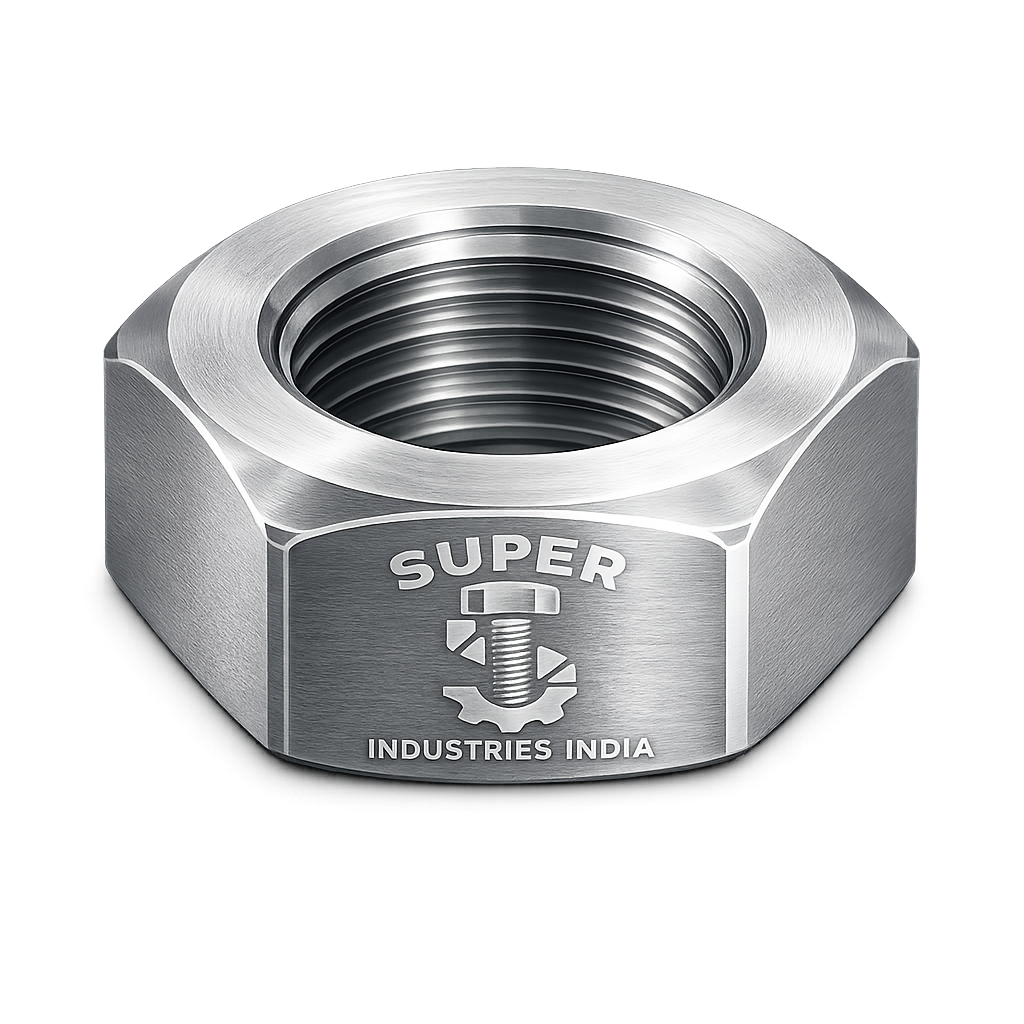
Role of Panel Nuts in Engineered Systems
Panel Nuts are critical fastening elements used in thin-wall mounting applications, where components must be securely fixed to sheet metal panels, enclosures, and structural skins without compromising accessibility or serviceability.
They are extensively deployed in:
- Electrical enclosures
- Control panels and PLC cabinets
- Switchgear assemblies
- Instrumentation panels
- Railway signaling systems
- HVAC control systems
- Industrial automation panels
In these systems, Panel Nuts are used to secure:
- Cable glands
- Selector switches
- Push buttons
- Indicator lamps
- Connectors and terminals
- Sensor housings
Functional Importance in Assembly Systems
Panel Nuts serve as rear-side locking elements, enabling:
- Axial clamping of mounted devices
- Stable positioning under vibration
- Non-permanent fastening (removable for maintenance)
They provide a mechanically reliable alternative to:
- Welded studs (which introduce thermal distortion)
- Integrated molded threads (which reduce flexibility)
- Riveted fastening (which limits disassembly)
Advantages in EPC and OEM Assembly
| Parameter | Panel Nuts | Welded Fasteners | Riveted Systems |
|---|---|---|---|
| Assembly Speed | High | Medium | Medium |
| Field Replaceability | High | Low | Low |
| Heat Impact | None | High | None |
| Maintenance Access | Full | Limited | Limited |
| Dimensional Flexibility | High | Low | Medium |
System-Level Contribution
Panel Nuts enable:
- Modular assembly architecture
- Rapid installation and replacement cycles
- Reduced downtime in maintenance operations
- Standardization across global panel designs
In EPC projects, this directly contributes to:
- Faster commissioning timelines
- Lower lifecycle maintenance costs
- Improved inspection accessibility
2. Technical Definition of Panel Nuts
Engineering Definition
Panel Nuts are:
Threaded fastening components designed to secure panel-mounted devices onto thin-wall structures by generating axial clamping force through controlled torque application.
They are specifically engineered for:
- Sheet metal thickness constraints
- Limited thread engagement zones
- Front-access component mounting with rear-side locking
Primary Functional Characteristics
- Internal threading (Metric / UNC / UNF)
- Reduced thickness profiles
- High surface contact for load distribution
- Compatibility with standardized panel cut-outs
Types of Panel Nuts
1. Hex Panel Nuts
- Standard external hex geometry
- Compatible with spanners and sockets
- Used where access allows tool engagement
2. Round Knurled Panel Nuts
- Cylindrical outer surface with knurling
- Enables hand tightening or friction-based locking
- Used in low-torque applications
3. Locking Panel Nuts
- Integrated locking features:
- Nylon insert
- Serrated face
- Deformed threads (prevailing torque type)
- Designed for vibration-prone environments
4. Thin (Jam) Panel Nuts
- Reduced thickness profile
- Used in:
- Limited clearance assemblies
- Locking against primary nuts
5. Heavy-Duty Panel Nuts
- Increased thickness and load capacity
- Used for:
- Large cable glands
- Industrial connectors
- High-load panel interfaces
Application-Specific Selection Logic
| Application Type | Recommended Panel Nut Type |
|---|---|
| Electrical control panels | Thin / Hex |
| Cable gland mounting | Heavy-duty |
| Vibration environments | Locking panel nuts |
| Low-load assemblies | Knurled |
| Double-nut locking | Jam nuts |
Super Industries
Global Manufacturer of Heavy & Custom Engineered Fasteners & Flanges
3. Engineering & Clamping Principle
Thread Engagement Mechanics
Panel Nuts operate based on internal-external thread interaction between:
- Nut internal threads (typically Class 6H or 2B)
- Mating threaded component (gland, switch body, connector)
Key parameters:
- Thread pitch
- Thread angle (60° for metric/UN threads)
- Engagement length
Effective thread engagement is limited, due to:
- Thin nut profiles
- Sheet metal constraints
Axial Clamping Force Generation
When torque is applied:
- Rotational input is converted into axial preload force
- This force compresses:
- Panel surface
- Mounted component flange
The clamping force:
- Prevents loosening
- Maintains positional stability
- Ensures sealing (in case of glands)
Torque-to-Preload Relationship
The relationship is governed by:
- Thread geometry
- Friction at thread interface
- Friction under nut bearing surface
General form:
![\[F = \frac{T}{K \cdot d}\]](https://superindustriesindia.in/wp-content/ql-cache/quicklatex.com-047c3812ff26cb229181955bd579e870_l3.png "Rendered by QuickLaTeX.com")
Where:
- ( F ) = axial preload force
- ( T ) = applied torque
- ( K ) = friction coefficient (nut factor)
- ( d ) = nominal diameter
Friction Factor Impact
Friction contributes to:
- ~85–90% of applied torque loss
- Only ~10–15% converts into preload
Factors affecting friction:
- Surface finish
- Coating type (zinc, nickel, etc.)
- Lubrication condition
- Material pairing
Resistance to Loosening
Panel Nuts are exposed to:
- Vibration (switchgear, rail systems)
- Thermal cycling
- Mechanical shock
To counter loosening:
Locking Mechanisms Used
- Nylon Insert (Prevailing Torque)
- Provides elastic interference
- Maintains friction during vibration
- Serrated Face
- Bites into panel surface
- Prevents rotational back-off
- Deformed Thread
- Creates radial pressure
- Generates self-locking effect
Panel Deformation Considerations
Due to thin-wall mounting:
- Excessive torque can cause:
- Panel bending
- Surface indentation
- Loss of preload
Design considerations:
- Increase contact area (flange or washer)
- Use controlled torque values
- Select appropriate nut thickness
4. Load & Mechanical Performance
Axial Load Capacity
Load capacity depends on:
- Thread size
- Material strength
- Engagement length
Limitations in Panel Nuts:
- Reduced thickness → lower thread engagement
- Load capacity is typically lower than standard full nuts
Thread Stripping Limits
Failure occurs when:
- Shear stress exceeds thread material strength
Critical factors:
- Nut material vs mating thread material
- Thread class fit
- Engagement depth
Vibration Resistance
Without locking features:
- Panel Nuts are susceptible to loosening
With locking:
- Retention improves significantly
- Preload loss rate reduces
Thermal Expansion Impact
Differential expansion between:
- Nut material
- Panel material
Can lead to:
- Loss of preload
- Loosening in high-temperature environments
Fatigue Under Repeated Tightening
Panel Nuts may experience:
- Repeated installation cycles
- Maintenance-driven removal
Effects:
- Thread wear
- Reduced friction stability
- Loss of locking efficiency
Failure Modes
| Failure Mode | Cause | Impact |
|---|---|---|
| Thread shear | Overload | Sudden failure |
| Loosening | Vibration | Loss of clamping |
| Panel distortion | Excess torque | Misalignment |
| Galling (SS) | Friction | Seizure |
| Fatigue wear | Repeated use | Reduced reliability |
Safety Factors
Recommended:
- Static loading: Factor of Safety ≥ 2
- Dynamic/vibration: ≥ 3
Recommended Tightening Practice
- Use calibrated torque tools
- Avoid over-tightening
- Apply lubrication where required
- Use locking variants for dynamic systems
Dimensional & Design Logic
Thread Standards
Panel Nuts are available in:
- Metric Threads (ISO)
- UNC / UNF Threads (Imperial)
Key Dimensional Parameters
| Parameter | Description |
|---|---|
| Thread size | Nominal diameter |
| Pitch | Distance between threads |
| Across flats | Tool engagement dimension |
| Thickness | Nut height |
| Thread class | Fit tolerance (6H / 2B) |
Fitment with Panel Hole Sizes
Design considerations:
- Panel hole diameter must allow:
- Component insertion
- Proper seating
Clearance logic:
| Condition | Result |
|---|---|
| Excess clearance | Misalignment |
| Tight fit | Installation difficulty |
Clearance & Interference Logic
- Panel Nuts rely on component flange-to-panel interface
- Not designed for interference fit within panel hole
- Proper seating surface is critical
Surface Contact Area Impact
Larger contact area:
- Reduces stress concentration
- Minimizes panel deformation
- Improves load distribution
Solutions:
- Flanged nuts
- Use of washers
- Serrated bearing faces
Tolerance Classes
Typical:
- Metric: 6H (nut)
- Imperial: 2B
These ensure:
- Proper fit with standard threaded components
- Controlled preload generation
Dimensional Stability Requirements
Critical for:
- Automated panel assembly lines
- CNC punched panels
- High-volume OEM production
Tolerance control ensures:
- Repeatable assembly
- Interchangeability
- Compliance with EPC specifications
5. Applicable Standards (ISO / DIN / ASTM)
Standards Framework for Panel Nuts
Panel Nuts are governed by a combination of:
- Thread standards
- Dimensional standards
- Material standards
- Coating and inspection standards
These collectively ensure interchangeability, mechanical reliability, and global compliance across EPC and OEM applications.
ISO Thread Standards
ISO Metric Threads
- Standard: ISO 68-1 / ISO 261 / ISO 965
- Thread angle: 60°
- Fit class: 6H (internal threads)
Relevance to Panel Nuts:
- Ensures compatibility with:
- Cable glands
- Electrical connectors
- Instrumentation fittings
- Provides:
- Controlled tolerance band
- Predictable preload behavior
DIN Nut Standards
Panel Nuts are typically aligned with:
DIN 439 – Thin Hex Nuts (Jam Nuts)
- Reduced thickness design
- Used in:
- Space-constrained panel assemblies
- Locking applications
DIN 934 – Standard Hex Nuts
- Reference geometry for:
- Across flats
- Thread proportions
ISO Equivalents
- DIN 934 → ISO 4032
- DIN 439 → ISO 4035
ASTM Material Standards
Carbon Steel Nuts
- ASTM A563
- Covers carbon and alloy steel nuts
- Defines:
- Mechanical strength
- Heat treatment requirements
Stainless Steel Fasteners
- Typically aligned with:
- ASTM A240 (raw material)
- ASTM A276 (bars and shapes)
Standards Mapping to Application Requirements
| Requirement | Applicable Standard | Relevance |
|---|---|---|
| Thread compatibility | ISO 261 / ISO 965 | Ensures fit with global components |
| Nut geometry | DIN 439 / ISO 4035 | Thin profile suitability |
| Mechanical strength | ASTM A563 | Load-bearing capability |
| Corrosion resistance | ASTM / ISO material grades | Environmental suitability |
| Electrical panels | IEC enclosure practices (reference) | Integration compatibility |
Compliance Expectations in EPC Projects
Panel Nuts supplied for EPC projects must meet:
- Dimensional conformity (ISO/DIN)
- Material traceability (ASTM)
- Inspection certification (EN 10204 3.1)
This ensures:
- Bid acceptance
- Inspection clearance
- Installation reliability
6. Material & Grade Options
Material selection for Panel Nuts is governed by:
- Mechanical load requirements
- Environmental exposure
- Electrical conductivity requirements
- Temperature operating range
A. Carbon Steel Panel Nuts
Grades
- ASTM A563 Grade A / C
- Low carbon steel variants
Characteristics
- Moderate strength
- Economical for bulk applications
- Requires surface coating for corrosion protection
Applications
- Indoor electrical panels
- Industrial control cabinets
- General-purpose mounting
B. Stainless Steel Panel Nuts
AISI 304 (1.4301)
- General corrosion resistance
- Suitable for humid environments
AISI 316 (1.4401)
- Enhanced corrosion resistance
- Suitable for:
- Marine environments
- Chemical exposure
Characteristics
- Non-magnetic (austenitic)
- Good strength-to-corrosion ratio
- Risk of galling under high torque
C. Brass Panel Nuts
Grade
- Free machining brass (CuZn alloys)
Characteristics
- High electrical conductivity
- Non-sparking
- Corrosion resistant in atmospheric conditions
Applications
- Electrical grounding systems
- Instrumentation panels
- Low-load assemblies
D. Alloy Steel Panel Nuts
Characteristics
- High tensile strength
- Suitable for heavy-duty applications
Applications
- High-load cable glands
- Industrial connectors in heavy equipment
Material Comparison Table (Engineering Reference)
| Material Grade | Yield Strength (MPa) | Tensile Strength (MPa) | Temperature Range (°C) | Corrosion Resistance | Electrical Conductivity | Typical Application |
|---|---|---|---|---|---|---|
| Carbon Steel (A563) | 240–400 | 400–550 | -20 to 300 | Low (coating required) | Low | Indoor panels |
| Stainless Steel 304 | 210–290 | 500–700 | -200 to 400 | Moderate | Low | Humid environments |
| Stainless Steel 316 | 220–300 | 520–720 | -200 to 450 | High | Low | Marine / chemical |
| Brass | 100–250 | 300–500 | -50 to 200 | Moderate | High | Electrical grounding |
| Alloy Steel | 600–900 | 800–1100 | -40 to 500 | Low (coated) | Low | Heavy-duty fastening |
Material Selection Considerations
| Condition | Recommended Material |
|---|---|
| Indoor, low corrosion | Carbon steel (plated) |
| Outdoor / humid | SS 304 |
| Marine / chemical | SS 316 |
| Electrical grounding | Brass |
| High load | Alloy steel |
7. Heat Treatment Information
Heat treatment is applied to improve:
- Mechanical strength
- Thread wear resistance
- Fatigue performance
Heat Treatment Processes
1. Case Hardening
- Surface hardening with softer core
- Improves:
- Thread wear resistance
- Surface durability
Used for:
- Carbon steel panel nuts
2. Quenching & Tempering
- Increases:
- Strength
- Toughness
Used for:
- Alloy steel variants
3. Stress Relieving
- Reduces residual stresses after forming
- Improves dimensional stability
Hardness Ranges (Typical)
| Material | Hardness (HV) |
|---|---|
| Carbon Steel | 120–200 HV |
| Case Hardened Surface | 450–700 HV (surface) |
| Stainless Steel | 150–250 HV |
| Alloy Steel (Q&T) | 250–350 HV |
Impact on Thread Performance
Heat treatment improves:
- Resistance to thread deformation
- Load-bearing capability
- Resistance to stripping
However:
- Excessive hardness may increase brittleness
- Must be controlled per standard
8. Manufacturing Process
Panel Nuts are manufactured through controlled, repeatable industrial processes ensuring dimensional accuracy and thread integrity.
Step-by-Step Manufacturing Flow
1. Raw Material Inspection
- Chemical composition verification
- Mechanical property validation
- Surface defect inspection
2. Forming Process
- High dimensional accuracy
- Improved grain structure
- Suitable for high-volume production
Cold Forging (Preferred)
Hot Forging (For Larger Sizes)
- Used for heavy-duty panel nuts
- Allows forming of thicker sections
3. Thread Formation
Thread Rolling
- Produces stronger threads
- Improves fatigue resistance
- Preferred for high-quality applications
Thread Cutting
- Used for:
- Small batch production
- Non-standard sizes
4. Heat Treatment (if required)
- Applied as per material grade
- Controlled temperature cycles
5. Surface Finishing
- Plating / coating / passivation
- Improves corrosion resistance
6. Cleaning
- Removal of oil, scale, and contaminants
- Ensures coating adhesion
7. Inspection
- Thread gauge testing
- Dimensional verification
- Surface quality check
8. Marking & Traceability
- Batch identification
- Material traceability
- Compliance with EPC documentation requirements
Dimensional Accuracy Control
Critical tolerances controlled during manufacturing:
- Thread pitch diameter
- Across flats dimension
- Nut thickness
Measurement tools:
- Vernier calipers
- Micrometers
- Go/No-Go gauges
9. Surface Finish Options
Surface finishing directly affects:
- Corrosion resistance
- Electrical conductivity
- Friction behavior
- Assembly performance
Common Surface Finishes
1. Zinc Plating
- Electroplated coating
- Moderate corrosion resistance
Used in:
- Indoor applications
2. Nickel Plating
- Improved corrosion resistance
- Better surface hardness
Used in:
- Industrial environments
3. Tin Plating
- High electrical conductivity
- Solderability
Used in:
- Electrical grounding applications
4. Black Oxide
- Minimal corrosion protection
- Reduces light reflection
Used in:
- Indoor dry environments
5. Passivation (Stainless Steel)
- Enhances corrosion resistance
- Removes free iron
6. Electropolishing
- Smooth surface finish
- Improved corrosion resistance
Used in:
- Clean environments
- Food / pharma panels
Surface Finish vs Performance
| Finish | Corrosion Resistance | Electrical Conductivity | Friction Impact | Typical Use |
|---|---|---|---|---|
| Zinc | Moderate | Moderate | Medium | General panels |
| Nickel | High | Moderate | Low | Industrial |
| Tin | Moderate | High | Low | Electrical |
| Black Oxide | Low | Low | Medium | Indoor |
| Passivation | High | Low | Low | Stainless steel |
| Electropolishing | High | Low | Low | Clean environments |
Selection Considerations
- Environmental exposure
- Electrical requirements
- Required lifespan
- Maintenance accessibility
A. Technical Dimension Tables for Panel Nuts
The following table provides reference dimensions for commonly used ISO metric Panel Nuts aligned with DIN 439 / ISO 4035 (thin nuts) and ISO 4032 (standard hex reference).
Note: Exact values may vary based on tolerance class and manufacturer control limits.
Metric Panel Nuts – Dimensional Reference Table
| Thread Size (M) | Pitch (mm) | Across Flats (mm) | Thickness – Thin (mm) | Thickness – Std Ref (mm) | Thread Class |
|---|---|---|---|---|---|
| M3 | 0.5 | 5.5 | 1.8 | 2.4 | 6H |
| M4 | 0.7 | 7 | 2.2 | 3.2 | 6H |
| M5 | 0.8 | 8 | 2.7 | 4.0 | 6H |
| M6 | 1.0 | 10 | 3.2 | 5.0 | 6H |
| M8 | 1.25 | 13 | 4.0 | 6.5 | 6H |
| M10 | 1.5 | 17 | 5.0 | 8.0 | 6H |
| M12 | 1.75 | 19 | 6.0 | 10.0 | 6H |
| M16 | 2.0 | 24 | 8.0 | 13.0 | 6H |
| M20 | 2.5 | 30 | 10.0 | 16.0 | 6H |
Design Interpretation
- Thin Panel Nuts (DIN 439 / ISO 4035):
- Used where panel clearance is limited
- Reduced thread engagement
- Standard Thickness Reference:
- Used for comparison in load capacity calculations
Panel Fitment Guidance
| Thread Size | Recommended Panel Hole (mm) | Clearance Type |
|---|---|---|
| M6 | 6.5 – 7.0 | Standard clearance |
| M10 | 10.5 – 11.0 | Free fit |
| M16 | 16.5 – 17.0 | Assembly clearance |
B. Load Capacity Table (Axial Load – Reference Values)
Axial load capacity is governed by:
- Thread shear area
- Material strength
- Engagement length
Values below assume carbon steel panel nuts with limited engagement (thin type).
| Thread Size | Tensile Stress Area (mm²) | Approx Axial Load Capacity (kN) | Recommended Safe Load (kN) (FOS ≥ 2) |
|---|---|---|---|
| M4 | 8.8 | 3.5 | 1.7 |
| M5 | 14.2 | 5.5 | 2.7 |
| M6 | 20.1 | 8.0 | 4.0 |
| M8 | 36.6 | 14.0 | 7.0 |
| M10 | 58.0 | 22.0 | 11.0 |
| M12 | 84.3 | 32.0 | 16.0 |
| M16 | 157.0 | 60.0 | 30.0 |
Engineering Note
Due to reduced thickness:
- Panel Nuts typically achieve 60–70% of full nut load capacity
- Thread stripping is the governing failure mode in thin variants
C. Torque Chart for Panel Nuts
Torque values are dependent on:
- Material
- Surface condition
- Lubrication
Metric Panel Nuts – Recommended Tightening Torque
| Thread Size | Dry Torque (Nm) | Lubricated Torque (Nm) | Stainless Steel (Nm) |
|---|---|---|---|
| M4 | 2.0 – 2.5 | 1.5 – 2.0 | 1.2 – 1.8 |
| M5 | 4.0 – 5.0 | 3.0 – 4.0 | 2.5 – 3.5 |
| M6 | 7.0 – 9.0 | 5.5 – 7.0 | 4.5 – 6.0 |
| M8 | 15 – 20 | 12 – 16 | 10 – 14 |
| M10 | 30 – 40 | 24 – 32 | 20 – 28 |
| M12 | 50 – 70 | 40 – 55 | 35 – 50 |
| M16 | 120 – 160 | 95 – 130 | 80 – 110 |
Torque Application Considerations
- Use lower torque for thin panel nuts to prevent:
- Panel deformation
- Thread stripping
- Stainless steel requires:
- Reduced torque
- Anti-seize lubrication (to prevent galling)
D. Preload Calculation Guide
Torque–Preload Relationship
Where:
- ( F ) = Preload force (N)
- ( T ) = Applied torque (Nm)
- ( K ) = Nut factor (0.15–0.25 typical)
- ( d ) = Nominal diameter (m)
Typical Friction Coefficients
| Condition | K Value |
|---|---|
| Dry steel | 0.20 – 0.25 |
| Zinc plated | 0.18 – 0.22 |
| Lubricated | 0.12 – 0.18 |
| Stainless steel | 0.20 – 0.30 |
Sample Calculation
Given:
- Thread: M10
- Torque: 30 Nm
- Nut factor (K): 0.20
- Diameter: 0.01 m
Calculation:
![\[F = \frac{30}{0.20 \times 0.01} = 15{,}000 \, \text{N}\]](https://superindustriesindia.in/wp-content/ql-cache/quicklatex.com-e49c3190839a31fbbe2e4ebc39a0f1c1_l3.png "Rendered by QuickLaTeX.com")
Engineering Interpretation
- Preload = 15 kN
- Must be checked against:
- Panel strength
- Thread stripping limit
- Application load
E. Mechanical Property Table
| Material | Yield Strength (MPa) | Tensile Strength (MPa) | Hardness (HV) | Elongation (%) |
|---|---|---|---|---|
| Carbon Steel (A563) | 240–400 | 400–550 | 120–200 | 15–25 |
| Stainless Steel 304 | 210–290 | 500–700 | 150–250 | 40–60 |
| Stainless Steel 316 | 220–300 | 520–720 | 150–250 | 40–60 |
| Brass | 100–250 | 300–500 | 80–150 | 20–40 |
| Alloy Steel | 600–900 | 800–1100 | 250–350 | 10–20 |
Performance Interpretation
- Higher strength → higher preload capability
- Higher elongation → better resistance to fatigue
- Hardness → thread wear resistance
F. Corrosion Resistance Table
| Environment | Carbon Steel (Plated) | SS 304 | SS 316 | Brass |
|---|---|---|---|---|
| Indoor humidity | Moderate | High | High | High |
| Outdoor industrial | Low–Moderate | Moderate | High | Moderate |
| Marine | Low | Moderate | High | Moderate |
| Chemical exposure | Low | Moderate | High | Moderate |
Engineering Note
- Stainless Steel 316 is preferred for:
- Coastal EPC projects
- Offshore panels
10. Inspection & Quality Control Methods
Panel Nuts must undergo multi-stage inspection to ensure compliance with EPC and OEM specifications.
1. Thread Gauge Inspection
- Go/No-Go gauges used
- Verifies:
- Pitch diameter
- Thread fit
Ensures compliance with:
- ISO 965
- ANSI B1.2
2. Dimensional Inspection
Measured parameters:
- Across flats
- Thickness
- Thread depth
Tools used:
- Vernier calipers
- Micrometers
- Optical comparators
3. Hardness Testing
Methods:
- Vickers (HV)
- Rockwell (HRB/HRC)
Purpose:
- Verify heat treatment effectiveness
- Ensure thread durability
4. Coating Thickness Testing
Methods:
- X-ray fluorescence (XRF)
- Micrometer-based coating measurement
Ensures:
- Compliance with plating standards
- Corrosion resistance performance
5. Salt Spray Testing
- Conducted as per:
- ASTM B117
Purpose:
- Evaluate corrosion resistance
- Validate coating durability
6. Mechanical Testing
Where required:
- Proof load testing
- Thread stripping tests
7. Third-Party Inspection
Panel Nuts for EPC projects are often inspected by:
- Independent inspection agencies
- Client-appointed inspectors
Scope includes:
- Dimensional verification
- Material traceability
- Coating validation
8. Certification
Supplied with:
- EN 10204 3.1 Material Test Certificate
Includes:
- Chemical composition
- Mechanical properties
- Heat treatment details
Inspection Compliance Summary
| Inspection Type | Purpose | Standard Reference |
|---|---|---|
| Thread gauge | Fit verification | ISO 965 |
| Dimensional | Geometry control | DIN / ISO |
| Hardness | Strength validation | ASTM |
| Coating | Corrosion protection | ASTM B633 |
| Salt spray | Durability | ASTM B117 |
| Certification | Traceability | EN 10204 |
Quality Control Outcome
Proper inspection ensures:
- Interchangeability
- Assembly reliability
- Compliance with EPC technical specifications
- Acceptance during third-party audits
11. Industries Served
Panel Nuts are used across multiple engineering sectors where panel-mounted component retention and serviceability are required.
1. Electrical & Power Distribution Systems
Applications:
- LT/HT panels
- Switchgear assemblies
- Distribution boards
- Motor control centers (MCC)
Functional role:
- Securing cable glands
- Mounting switches and indicators
- Supporting terminal interfaces
Engineering requirement:
- Dimensional consistency
- Electrical continuity (in grounding applications)
- Resistance to thermal cycling
2. Oil & Gas Control Systems
Applications:
- Control panels in refineries
- Instrumentation cabinets
- Hazardous area enclosures
Functional role:
- Securing explosion-proof cable glands
- Mounting instrumentation devices
Engineering requirement:
- Corrosion resistance (SS 316)
- Reliability under vibration
- Compliance with project specifications
3. Railways & Metro Systems
Applications:
- Signaling panels
- Control cabinets
- Onboard electrical systems
Functional role:
- Mounting control switches
- Securing connectors
Engineering requirement:
- Vibration resistance
- Long-term reliability
- Consistent torque performance
4. Renewable Energy Systems
Applications:
- Solar inverter panels
- Wind turbine control systems
Functional role:
- Securing cable entries
- Mounting electrical interfaces
Engineering requirement:
- UV and environmental resistance
- Corrosion protection
- Long service life
5. Industrial Automation Systems
Applications:
- PLC panels
- SCADA systems
- Machine control panels
Functional role:
- Mounting sensors and connectors
- Supporting modular panel layouts
Engineering requirement:
- Repeatable assembly
- Ease of maintenance
- High interchangeability
6. Infrastructure & Commercial Projects
Applications:
- Building automation panels
- HVAC control systems
- Smart infrastructure systems
Functional role:
- Securing control components
- Supporting panel-based systems
Engineering requirement:
- Cost-performance balance
- Standardized components
- Maintenance accessibility
12. Export Capability & Global Supply
Geographical Supply Coverage
Super Industries supplies Panel Nuts to:
- United States
- European Union
- Middle East (GCC countries)
- Southeast Asia
- Africa (project-based supply)
Export Packaging Standards
Packaging is designed for:
- Corrosion protection
- Mechanical damage prevention
- Traceability
Types:
- Bulk cartons (lined)
- Export-grade palletization
- Moisture barrier packaging (VCI / desiccants)
Bulk Supply Capability
Production systems support:
- High-volume batch manufacturing
- Consistent dimensional repeatability
- Project-specific quantities
Documentation for Export
Each shipment includes:
- Commercial invoice
- Packing list
- Certificate of origin
- EN 10204 3.1 MTC
- Coating and inspection reports
OEM Supply Chain Integration
Super Industries supports:
- Vendor registration processes
- Approved vendor list (AVL) requirements
- Long-term supply agreements
Capabilities include:
- Scheduled deliveries
- Batch traceability
- Custom specification manufacturing
13. Procurement & Installation View
1. Procurement Considerations
EPC and OEM procurement teams evaluate Panel Nuts based on:
Technical Parameters
- Thread standard (ISO / UNC / UNF)
- Material grade
- Surface finish
- Dimensional compliance
Documentation
- Material test certificates
- Inspection reports
- Compliance with standards
Supply Capability
- Lead time
- Batch consistency
- Export readiness
2. Installation Guidelines
Panel Preparation
- Ensure correct hole size (clearance fit)
- Remove burrs and sharp edges
- Verify panel thickness compatibility
Assembly Sequence
- Insert panel-mounted component (e.g., cable gland)
- Position sealing washer (if required)
- Thread Panel Nut from rear side
- Apply torque using calibrated tool
Torque Control
- Follow recommended torque values (refer Part 3)
- Avoid over-tightening to prevent:
- Thread stripping
- Panel deformation
Locking Practices
For vibration-prone environments:
- Use:
- Nylon insert panel nuts
- Serrated face nuts
- Double-nut locking (jam nut method)
Electrical Considerations
For grounding applications:
- Ensure:
- Clean contact surfaces
- Conductive material (brass / tin plated)
- Proper tightening
3. Maintenance & Inspection
Periodic checks include:
- Tightness verification
- Corrosion inspection
- Thread condition
Replacement recommended if:
- Thread wear is observed
- Coating is degraded
- Locking efficiency is reduced
14. Custom Engineering Capabilities
Super Industries supports project-specific Panel Nuts for EPC and OEM requirements.
Customization Options
1. Thread Configurations
- Non-standard metric sizes
- UNC / UNF threads
- Fine pitch variants
2. Geometry Modifications
- Thin-wall optimized designs
- Increased bearing surface
- Flanged panel nuts
3. Material Customization
- High-strength alloy variants
- High-conductivity brass
- Corrosion-resistant stainless grades
4. Surface Coatings
- Project-specific plating thickness
- Specialized coatings for:
- Marine environments
- Chemical exposure
5. Marking & Identification
- Batch marking
- OEM-specific identification
- Traceability codes
Engineering Support Scope
- Drawing-based manufacturing
- Prototype development
- Dimensional validation
- Pre-dispatch inspection support
Quality & Compliance Alignment
Panel Nuts are manufactured and supplied in alignment with:
- ISO thread standards
- DIN dimensional standards
- ASTM material specifications
- EN 10204 certification requirements
Quality systems ensure:
- Repeatability
- Traceability
- Compliance with EPC project specifications
Conclusion
Panel Nuts are precision fastening components designed for thin-wall panel applications, where:
- Controlled clamping force
- Dimensional accuracy
- Serviceability
are critical to system performance.
Their correct selection depends on:
- Material properties
- Thread standards
- Load requirements
- Environmental conditions
For EPC and OEM applications, Panel Nuts must provide:
- Reliable preload generation
- Resistance to vibration-induced loosening
- Compatibility with standardized panel assemblies
- Compliance with international standards
Super Industries supplies Panel Nuts with a focus on:
- Engineering accuracy
- Manufacturing consistency
- Inspection compliance
- Global project requirements