
Hex Cap Bolts
Super Industries
“Global Manufacturer of Heavy & Custom Engineered Fasteners for Oil & Gas, Power & EPC Contractors.”
1. Industry Context & System Relevance
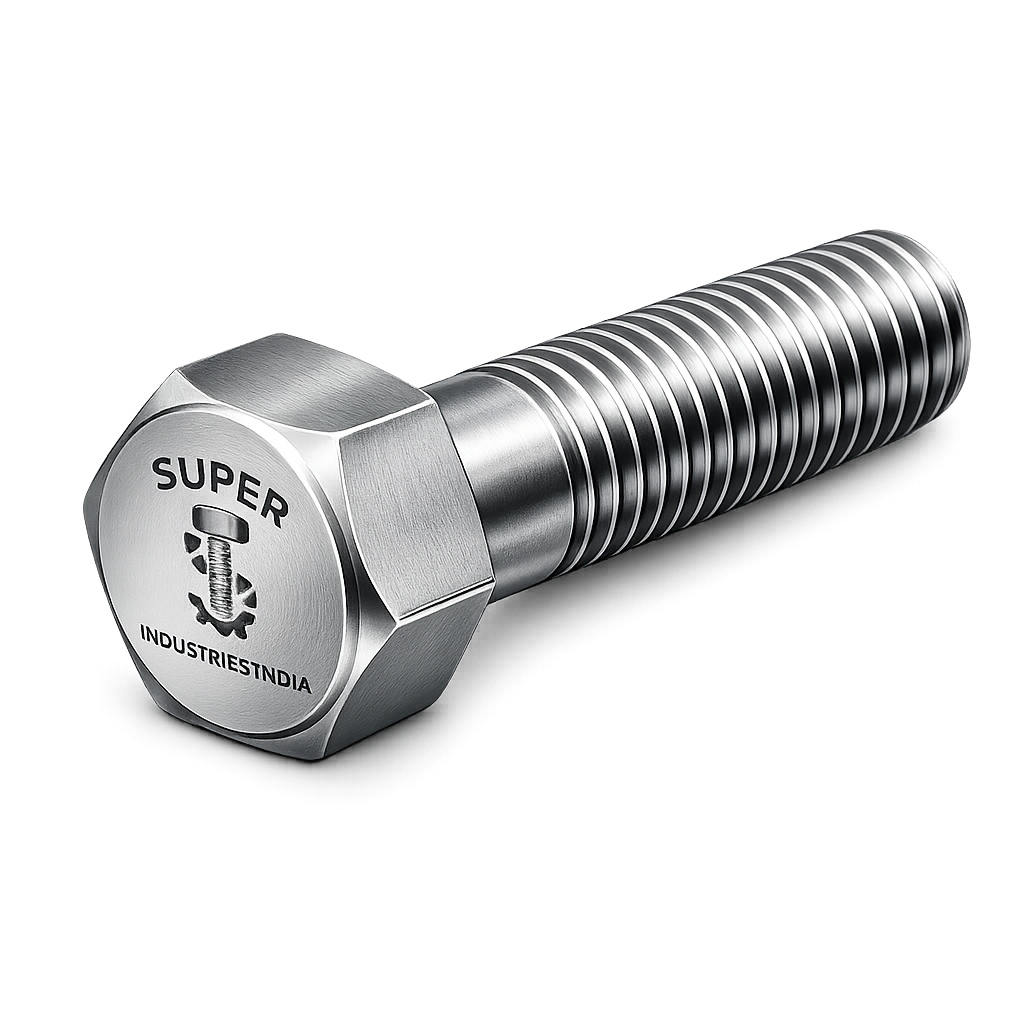
Role of Hex Cap Bolts in Industrial Mechanical Assemblies
Bolted joints represent one of the most widely used mechanical fastening systems in industrial engineering. Within this category, Hex Cap Bolts are commonly specified for applications requiring:
- Controlled clamping force
- High structural load capacity
- Field-serviceable mechanical joints
- Compatibility with standard wrenching tools
- Repeatable installation in industrial environments
A hexagonal head geometry provides consistent wrench engagement while the threaded shank generates clamping force through torque application. This combination enables hex cap bolts to function as primary structural fasteners in heavy mechanical and structural assemblies.
Industrial systems rely on these fasteners because they allow disassembly for maintenance, while still maintaining the structural integrity required for load-bearing applications.
Typical Industrial Applications
Oil & Gas Facilities
In upstream and downstream oil & gas operations, hex cap bolts are used extensively in:
- Equipment skid assemblies
- Pipe supports and structural frames
- Compressor foundations
- Pump housings
- Pressure vessel accessories
- Heat exchanger supports
The fasteners must withstand vibration, thermal expansion, and cyclic loading while maintaining joint integrity.
Structural Steel Assemblies
Structural engineering projects frequently specify hex cap bolts for:
- Steel beam connections
- Equipment support structures
- Machinery platforms
- Crane runway assemblies
- Structural bracing systems
In these assemblies, the bolts function as load-transferring connectors, distributing tensile and shear forces across structural joints.
Power Generation Facilities
Power plants incorporate large quantities of heavy-duty bolting systems. Hex cap bolts are commonly installed in:
- Turbine support frames
- Generator housings
- Structural steel supports
- Cooling tower assemblies
- Auxiliary equipment mounts
Power generation environments require fasteners capable of maintaining preload under thermal cycling and vibration.
Refineries and Petrochemical Plants
Refineries require mechanically reliable fastening solutions due to:
- high operating temperatures
- hydrocarbon exposure
- cyclic equipment loading
Applications include:
- pump assemblies
- mechanical skids
- steel pipe racks
- rotating equipment foundations
Wind Turbine Systems
Modern wind turbines rely on high-strength bolts for mechanical integrity. Hex cap bolts are used in:
- nacelle equipment mounting
- generator support assemblies
- gearbox frames
- auxiliary mechanical systems
Wind energy applications demand fasteners capable of withstanding dynamic fatigue loads generated by continuous rotor operation.
Heavy Machinery & Mining Equipment
Mining and heavy equipment manufacturers utilize hex cap bolts in:
- bucket assemblies
- equipment chassis
- mechanical housings
- gearboxes
- hydraulic structures
These applications require fasteners that resist loosening under vibration and shock loading.
Steel Plants and Industrial Infrastructure
Industrial infrastructure projects commonly incorporate hex cap bolts for:
- furnace structures
- conveyor systems
- material handling equipment
- plant maintenance assemblies
Such installations prioritize mechanical robustness and ease of maintenance.
Why Hex Cap Bolts Are Used in High-Load Bolted Joints
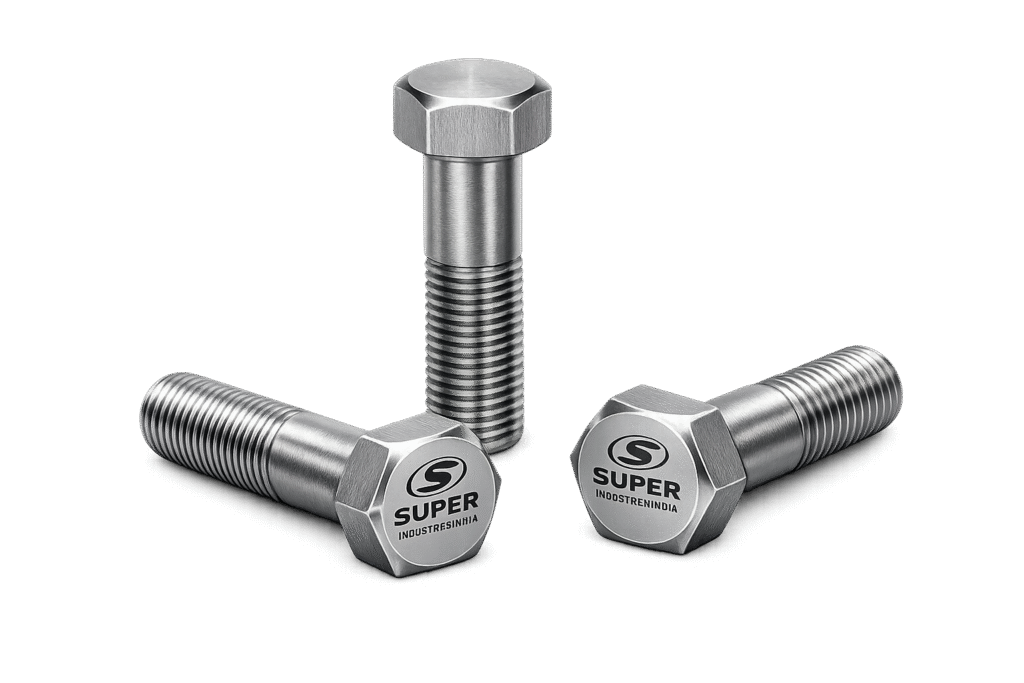
The widespread adoption of hex cap bolts in industrial assemblies is linked to several engineering characteristics:
1. Wrench Accessibility
The hexagonal head configuration provides six flat surfaces that enable torque application using standard tools such as:
- open-end wrenches
- box wrenches
- socket tools
- hydraulic torque wrenches
This design supports consistent installation torque and allows bolt tightening in confined spaces.
2. High Preload Capability
Hex cap bolts are capable of generating substantial clamping force when tightened to specified torque levels. Preload produced during tightening compresses the joint members, creating friction that resists separation or sliding under service loads.
3. Structural Joint Stability
When installed correctly, hex cap bolts produce a preloaded joint in which:
- the clamped components carry operational loads through friction
- bolt tension remains within allowable limits
- joint separation is prevented under service loads
This behavior is fundamental in structural steel connections and machinery assemblies.
Comparison with Other Fastener Types
Hex Cap Bolts vs Stud Bolts
Stud bolts are threaded rods without a head, commonly used with nuts on both ends.
Comparison:
| Characteristic | Hex Cap Bolts | Stud Bolts |
|---|---|---|
| Head | Hexagonal | None |
| Installation | One-sided access possible | Requires nuts both sides |
| Typical Use | Machinery & structural assemblies | Flanged piping systems |
| Torque Application | Through bolt head | Through nut |
Stud bolts are often preferred for pressure flange connections, while hex cap bolts are used for general mechanical assemblies.
Hex Cap Bolts vs Carriage Bolts
Carriage bolts have a rounded head with a square neck designed to prevent rotation in wood or soft materials.
Comparison:
| Characteristic | Hex Cap Bolts | Carriage Bolts |
|---|---|---|
| Head shape | Hexagonal | Round |
| Anti-rotation feature | Not required | Square neck |
| Applications | Structural steel, machinery | Wood structures |
Carriage bolts are not typically used in high-load industrial joints.
Hex Cap Bolts vs Socket Head Bolts
Socket head bolts feature an internal hex recess for tightening with Allen keys.
Super Industries
Global Manufacturer of Heavy & Custom Engineered Fasteners & Flanges
2. Technical Definition
Engineering Definition of Hex Cap Bolts
A Hex Cap Bolt is a headed externally threaded fastener designed for use with a nut or in a tapped hole, featuring:
- a hexagonal head for torque application
- a washer bearing surface beneath the head
- a machine-threaded shank
- controlled dimensional tolerances according to recognized fastener standards
The fastener functions by generating clamping force between two or more components when torque is applied.
Key Geometric Characteristics
Hexagonal Head
The hex head geometry provides six wrenching flats allowing uniform torque transmission.
Key parameters include:
- across-flat dimension
- head height
- chamfer geometry
These parameters are defined in ASME B18.2.1 and equivalent international standards.
Washer Face Bearing Surface
A machined bearing surface under the bolt head distributes the clamping force across the joint surface.
Functions include:
- reducing localized stress concentrations
- minimizing embedment deformation
- improving torque-to-tension consistency
Machine-Threaded Shank
The threaded portion of the bolt engages with a nut or tapped hole to convert applied torque into axial tension.
Threads are typically produced by:
- thread rolling
- precision machining
Thread profiles conform to:
- Unified Thread Standard (UTS)
- ISO metric threads
Fully Threaded vs Partially Threaded Bolts
Fully Threaded Hex Cap Bolts
A fully threaded bolt contains threads extending from the head to the end of the shank.
Advantages:
- greater thread engagement flexibility
- adjustable grip length
Limitations:
- reduced shear strength in unthreaded joint zones.
Partially Threaded Hex Cap Bolts
Partially threaded bolts incorporate a smooth shank section between the head and threaded portion.
Advantages include:
- improved shear capacity
- better load distribution across joint members
- reduced stress concentration in threads.
Bolt Head Geometry
The geometry of the hex head influences:
- torque transmission capability
- wrench engagement
- structural clearance
Typical head characteristics include:
- chamfered top edges
- flat bearing surface
- controlled head height.
Bearing Surface Function
The bearing surface beneath the head transfers compressive force into the clamped joint members.
Key functions include:
- preventing material indentation
- ensuring even load distribution
- stabilizing the joint interface.
Generation of Clamping Force
Clamping force is produced when tightening torque causes the bolt to stretch elastically.
This elongation generates axial tension in the bolt which compresses the joint components together.
The clamping force must exceed the external loads acting on the joint to prevent separation.
Hex Bolts vs Hex Cap Screws
In industrial practice, the terms hex bolt and hex cap screw are sometimes used interchangeably, but standards distinguish them based on tolerances and installation method.
Hex Bolts
- Typically used with nuts
- Looser dimensional tolerances
- Suitable for structural joints.
Hex Cap Screws
Defined by ASME B18.2.1 with tighter tolerances.
Characteristics include:
- precision head dimensions
- washer-face bearing surface
- designed for use in tapped holes.
Tolerance Differences in ASME Standards
ASME standards specify dimensional tolerances that influence interchangeability and mechanical performance.
Key controlled dimensions include:
- across-flat head size
- head height
- thread class tolerance
- shank diameter
These tolerances ensure compatibility between bolts, nuts, and joint components across international manufacturing systems.
3. Mechanical Fastening Principle
Bolt Preload Generation
When a hex cap bolt is tightened, torque applied to the head produces rotational movement of the threads. This rotation converts torque into axial tension, elongating the bolt.
The bolt behaves like an elastic spring, storing mechanical energy in the form of tensile strain.
Preload is the initial tensile force generated in the bolt during tightening.
Clamping Force Mechanics
The tensile force generated in the bolt produces an equal compressive force on the joint members. This compression clamps the components together, creating friction at the interface.
The friction force prevents:
- sliding between components
- joint separation under service loads.
Thread Friction vs Bearing Friction
During tightening, applied torque is divided between two primary friction zones:
- Thread friction between bolt and nut threads
- Bearing friction between the bolt head and joint surface
Typically:
- 40–50% of torque is consumed by thread friction
- 40–50% by bearing friction
- only 10–15% contributes to bolt tension.
This distribution explains why lubrication significantly affects torque-tension relationships.
Torque-to-Tension Relationship
The relationship between torque and preload is commonly approximated by:
[
![\[T = K \times F \times d\]](https://superindustriesindia.in/wp-content/ql-cache/quicklatex.com-5c8335475433270e77396e6ac94bcb95_l3.png "Rendered by QuickLaTeX.com")
Where:
T = tightening torque
F = desired bolt preload
d = bolt diameter
K = torque coefficient (dependent on friction)
This relationship forms the basis for torque charts used in field installation.
Joint Stiffness Interaction
The stiffness of the bolt and clamped components determines how loads are distributed.
Two elements behave like springs:
- the bolt (in tension)
- the joint members (in compression)
Load applied to the joint is shared between these elements depending on their stiffness ratio.
Load Distribution Across Bolt Groups
In assemblies with multiple bolts, external loads are distributed among the bolts based on:
- bolt spacing
- joint geometry
- stiffness characteristics
Proper bolt layout ensures even load distribution and prevents localized overloading.
Prevention of Joint Separation
A correctly preloaded bolt maintains compression between joint members even when external loads are applied.
Joint separation occurs if external tensile forces exceed the preload force.
Maintaining adequate preload ensures:
- structural integrity
- reduced fatigue risk
- improved joint stability.
Role of Washers
Washers are commonly used with hex cap bolts to:
- distribute load across softer materials
- prevent embedment into joint surfaces
- improve torque consistency.
Common washer types include:
- flat washers
- hardened structural washers.
Embedment Loss
After installation, microscopic surface irregularities between joint components may compress under load.
This phenomenon is called embedment loss, resulting in a small reduction in bolt preload.
Mitigation methods include:
- hardened washers
- controlled tightening procedures
- re-torque after initial loading.
Slip-Critical Joints
Slip-critical joints rely on friction between joint surfaces to resist shear loads.
High bolt preload generates friction that prevents sliding between connected plates.
These joints are commonly used in:
- structural steel bridges
- crane supports
- heavy machinery frames.
Pre-Tensioned Joints
In pre-tensioned joints, bolts are intentionally tightened to a specified tension level.
Pre-tensioned connections are used where:
- dynamic loads exist
- fatigue resistance is required
- joint separation must be prevented.
Typical applications include:
- rotating machinery
- heavy structural assemblies
- high-load mechanical systems.
4. Applicable Standards (ASTM / ISO / DIN / ASME)
Industrial Hex Cap Bolts are governed by a structured set of dimensional and mechanical standards that ensure interchangeability, predictable strength characteristics, and global procurement compatibility.
These standards define:
- bolt geometry
- thread tolerances
- mechanical properties
- material grades
- heat treatment requirements
- testing protocols
Compliance with recognized fastener standards is essential for EPC procurement evaluation, structural engineering approval, and third-party inspection acceptance.
ASME Fastener Dimensional Standards
ASME B18.2.1 — Hex Bolts and Hex Cap Screws
The primary dimensional standard for inch-series hex cap bolts is ASME B18.2.1.
This specification defines:
• Head dimensions
• Across-flat sizes
• Head height tolerances
• Thread length
• Washer face geometry
• Chamfer requirements
The standard distinguishes between:
- Hex Bolts
- Hex Cap Screws
Hex cap screws generally have tighter dimensional tolerances and are commonly used in precision mechanical assemblies and tapped-hole applications.
ASTM Mechanical Property Standards
ASTM specifications define the material chemistry, mechanical strength, and heat treatment conditions required for industrial fasteners.
ASTM A307 — Carbon Steel Bolts
ASTM A307 covers low and medium strength carbon steel bolts used in general structural applications.
Typical characteristics:
- moderate tensile strength
- general-purpose structural use
- suitable for non-critical joints.
Grades include:
• A307 Grade A
• A307 Grade B
ASTM A325 — High Strength Structural Bolts
ASTM A325 bolts are heat-treated structural fasteners used in steel construction.
Key characteristics:
- quenched and tempered alloy steel
- high tensile strength
- slip-critical joint compatibility.
Common applications include:
- steel building frames
- bridge connections
- heavy industrial structures.
ASTM A490 — Ultra High Strength Structural Bolts
ASTM A490 bolts provide higher mechanical strength than A325.
Typical characteristics:
- alloy steel construction
- high tensile strength
- designed for critical structural joints.
Applications include:
- heavy structural assemblies
- high-load steel structures.
ASTM A193 B7 / B7M — Alloy Steel Bolting for High Temperature Service
ASTM A193 B7 is widely used in pressure equipment and high-temperature service.
Material characteristics include:
- chromium-molybdenum alloy steel
- quenched and tempered microstructure
- high tensile and yield strength.
Applications include:
- pressure vessels
- refinery equipment
- power plant systems
- heat exchangers.
B7M is a modified version providing controlled hardness for sour service environments.
ASTM A320 L7 — Low Temperature Alloy Steel Bolting
ASTM A320 L7 bolts are used in cryogenic and low-temperature applications.
Key characteristics:
- alloy steel construction
- impact tested at low temperatures
- controlled toughness properties.
Typical service environments include:
- LNG facilities
- cryogenic piping
- cold climate installations.
International Fastener Standards
Industrial projects often require compliance with ISO and DIN fastener standards to support global sourcing and equipment interchangeability.
ISO 4014 — Hex Bolts (Partially Threaded)
ISO 4014 defines:
- metric hex bolts
- partial thread configurations
- dimensional tolerances.
These bolts are widely used in structural and mechanical assemblies across Europe and Asia.
ISO 4017 — Fully Threaded Hex Bolts
ISO 4017 covers fully threaded hex bolts used where maximum thread engagement is required.
Applications include:
- machinery assemblies
- maintenance fasteners
- equipment structures.
DIN 931 — Partially Threaded Hex Bolts
DIN 931 is a widely used German standard defining partially threaded hex bolts.
Key parameters include:
- head geometry
- thread length
- tolerance classes.
DIN bolts are widely used across European industrial equipment.
DIN 933 — Fully Threaded Hex Bolts
DIN 933 defines fully threaded metric hex bolts.
Typical applications include:
- equipment assembly
- mechanical fastening systems
- maintenance hardware.
EN ISO Fastener Standards
European standards harmonize ISO and EN requirements.
Examples include:
- EN ISO 4014
- EN ISO 4017
- EN ISO 898 (mechanical properties).
These standards support European structural engineering codes and equipment directives.
Relationship Between Standards and Application Type
Different standards are selected based on mechanical load conditions and environmental service requirements.
| Application | Typical Standard |
|---|---|
| Structural steel joints | ASTM A325 / A490 |
| Pressure equipment | ASTM A193 B7 |
| Cryogenic service | ASTM A320 L7 |
| General machinery | ISO 4014 / DIN 931 |
| Metric industrial assemblies | ISO 4017 / DIN 933 |
Proper specification ensures that the fasteners meet the mechanical and environmental demands of the application.
5. Material & Grade Options
Material selection for Hex Cap Bolts depends on:
- mechanical load requirements
- environmental exposure
- operating temperature
- corrosion risk.
Common industrial fastener materials include carbon steel, alloy steel, stainless steel, and duplex stainless steel.
Carbon Steel Hex Cap Bolts
Carbon steel bolts are widely used in general structural and mechanical assemblies.
Typical standards:
- ASTM A307
- ASTM A325.
Characteristics:
- moderate tensile strength
- economical material cost
- suitable for non-corrosive environments.
Carbon steel bolts are typically protected using zinc plating or galvanizing when corrosion resistance is required.
Alloy Steel Hex Cap Bolts
Alloy steels provide higher mechanical strength and improved temperature resistance.
Common grades include:
- ASTM A193 B7
- ASTM A193 B16.
ASTM A193 B7
Material composition typically includes:
- chromium
- molybdenum
- carbon.
These elements enhance:
- high-temperature strength
- creep resistance
- mechanical durability.
Typical service range:
- refinery equipment
- pressure vessels
- steam systems.
ASTM A193 B16
B16 provides higher temperature capability compared with B7.
Typical applications include:
- high-temperature piping
- petrochemical reactors
- steam turbine assemblies.
Stainless Steel Hex Cap Bolts
Stainless steels are used where corrosion resistance is required.
Common grades include:
- ASTM F593
- A2-70
- A4-80.
A2-70 (Equivalent to SS304)
Characteristics:
- good corrosion resistance
- non-magnetic properties
- moderate mechanical strength.
Applications include:
- food processing equipment
- marine hardware
- chemical plant structures.
A4-80 (Equivalent to SS316)
A4-80 bolts contain molybdenum, improving resistance to:
- chloride corrosion
- marine environments
- chemical exposure.
Typical uses include:
- offshore platforms
- marine structures
- chemical processing plants.
Duplex Stainless Steel Bolts
Duplex stainless steels combine:
- high mechanical strength
- superior corrosion resistance.
Common grades include:
- F51 (UNS S31803)
- F55 (UNS S32760).
These materials are used in environments involving:
- seawater exposure
- offshore installations
- aggressive chemical service.
Material Comparison Table
| Grade | Yield Strength | Tensile Strength | Temperature Range | Corrosion Resistance | Typical Industry Use |
|---|---|---|---|---|---|
| ASTM A307 | ~240 MPa | ~415 MPa | -20°C to 200°C | Low | Structural assemblies |
| ASTM A325 | ~660 MPa | ~830 MPa | -20°C to 400°C | Moderate | Structural steel joints |
| ASTM A193 B7 | ~720 MPa | ~860 MPa | -29°C to 450°C | Moderate | Pressure equipment |
| ASTM A193 B16 | ~760 MPa | ~950 MPa | up to 540°C | Moderate | High-temperature systems |
| A2-70 (SS304) | ~450 MPa | ~700 MPa | -200°C to 425°C | High | Chemical equipment |
| A4-80 (SS316) | ~600 MPa | ~800 MPa | -200°C to 500°C | Very High | Marine & offshore |
| Duplex F51 | ~450 MPa | ~620 MPa | -50°C to 300°C | Very High | Offshore structures |
| Super Duplex F55 | ~550 MPa | ~750 MPa | -50°C to 300°C | Excellent | Seawater equipment |
6. Heat Treatment
Heat treatment processes are used to achieve the required mechanical properties and microstructure in hex cap bolts.
These processes influence:
- tensile strength
- hardness
- ductility
- fatigue resistance.
Quenching and Tempering
Quenching and tempering is commonly applied to alloy steel fasteners such as ASTM A193 B7.
Process steps:
- Heating steel above critical transformation temperature
- Rapid cooling (quenching) in oil or water
- Controlled reheating (tempering).
This process produces a tempered martensitic microstructure, providing high strength combined with acceptable ductility.
Normalizing
Normalizing involves heating the steel above the transformation temperature followed by air cooling.
This process refines grain structure and improves:
- toughness
- dimensional stability.
Stress Relieving
Stress relieving reduces residual stresses generated during manufacturing operations such as forging and thread rolling.
This process improves dimensional stability and fatigue resistance.
Solution Annealing (Stainless Steel)
Stainless steel bolts undergo solution annealing to:
- dissolve carbide precipitates
- restore corrosion resistance
- achieve uniform microstructure.
After heating, the material is rapidly cooled to retain the desired phase structure.
Hardness Control
Heat-treated bolts must maintain hardness levels within specified limits defined by ASTM standards.
Hardness testing methods include:
- Rockwell hardness testing
- Brinell hardness testing.
Proper hardness ensures:
- required mechanical strength
- resistance to brittle fracture.
Temper Embrittlement Prevention
Certain alloy steels may become brittle when exposed to intermediate temperatures.
Control methods include:
- controlled tempering temperatures
- chemical composition limits
- post-heat-treatment testing.
Charpy V-Notch Impact Testing
For applications involving low temperatures or dynamic loading, Charpy V-Notch testing is performed.
This test measures the impact energy absorbed during fracture, indicating material toughness.
Industries requiring impact-tested bolts include:
- LNG plants
- offshore installations
- cold climate structures.
7. Manufacturing Process
Production of Hex Cap Bolts follows a controlled manufacturing sequence designed to ensure dimensional accuracy and mechanical reliability.
1. Raw Material Inspection
The manufacturing process begins with inspection of incoming raw materials.
Verification includes:
- chemical composition testing
- mill test certificate review
- dimensional inspection of bars.
Material traceability is maintained throughout the production cycle.
2. Hot Forging of Bolt Heads
Bolt heads are produced through hot forging operations.
Steps include:
- heating steel bars to forging temperature
- forming hexagonal head geometry in forging dies
- trimming flash material.
Hot forging improves grain flow and mechanical strength around the bolt head.
3. Thread Rolling or Machining
Threads are typically produced by thread rolling, which plastically deforms the material to form the thread profile.
Advantages include:
- improved fatigue strength
- smooth surface finish
- consistent thread geometry.
For large diameter bolts, threads may be produced through precision machining.
4. Heat Treatment
Depending on the required grade, bolts undergo:
- quenching and tempering
- normalizing
- stress relieving.
Heat treatment ensures the required mechanical properties defined by ASTM standards.
5. Surface Finishing
After heat treatment, bolts may receive protective coatings such as:
- galvanizing
- zinc plating
- phosphate coating
- PTFE coatings.
Surface finishing improves corrosion resistance and installation characteristics.
6. Dimensional Inspection
Dimensional verification ensures compliance with specified standards.
Inspection includes:
- head dimensions
- thread pitch and profile
- shank diameter
- overall length.
Measurement tools include:
- thread gauges
- micrometers
- coordinate measuring instruments.
7. Mechanical Testing
Mechanical property verification includes:
- tensile testing
- proof load testing
- hardness testing
- impact testing when required.
These tests confirm compliance with specified mechanical property standards.
8. Marking and Traceability
Industrial bolts are marked to indicate:
- manufacturer identification
- material grade
- heat treatment condition.
8.Engineering Tables, Torque Charts, Preload Calculations, Surface Finishes, and Inspection
This section provides engineering reference tables and calculation guidance for the selection, installation, and verification of Hex Cap Bolts used in structural and mechanical assemblies.
The data presented supports:
- structural joint design
- field installation torque control
- EPC procurement evaluation
- third-party inspection review
Values presented are typical engineering references and must be verified against applicable project specifications, applicable standards, and joint design calculations.
A. Hex Cap Bolt Dimension Table
Dimensional parameters of hex cap bolts are governed by standards such as ASME B18.2.1, ISO 4014, and DIN 931 / DIN 933.
These standards define head geometry, thread pitch, and dimensional tolerances to ensure interchangeability between bolts, nuts, and washers.
Typical Hex Cap Bolt Dimensions (Metric Series)
| Bolt Diameter | Thread Pitch | Head Size (Across Flats) | Head Height | Thread Length | Standard Reference |
|---|---|---|---|---|---|
| M6 | 1.0 mm | 10 mm | 4 mm | 18 mm | ISO 4017 |
| M8 | 1.25 mm | 13 mm | 5.3 mm | 22 mm | ISO 4017 |
| M10 | 1.5 mm | 17 mm | 6.4 mm | 26 mm | ISO 4017 |
| M12 | 1.75 mm | 19 mm | 7.5 mm | 30 mm | ISO 4014 |
| M16 | 2.0 mm | 24 mm | 10 mm | 38 mm | ISO 4014 |
| M20 | 2.5 mm | 30 mm | 12.5 mm | 46 mm | ISO 4014 |
| M24 | 3.0 mm | 36 mm | 15 mm | 54 mm | ISO 4014 |
| M30 | 3.5 mm | 46 mm | 18.7 mm | 66 mm | ISO 4014 |
Dimensional tolerances control:
- head geometry
- thread engagement
- bolt alignment
- wrench accessibility.
For structural assemblies, the across-flat dimension must remain within standard tolerance to ensure compatibility with installation tools and hydraulic torque equipment.
B. Mechanical Strength Table
Mechanical properties for Hex Cap Bolts depend on the specified material grade and heat treatment condition.
| Grade | Proof Load | Yield Strength | Tensile Strength | Elongation |
|---|---|---|---|---|
| ASTM A307 | 240 MPa | 240 MPa | 415 MPa | 18% |
| ASTM A325 | 660 MPa | 660 MPa | 830 MPa | 14% |
| ASTM A490 | 940 MPa | 940 MPa | 1040 MPa | 12% |
| ASTM A193 B7 | 720 MPa | 720 MPa | 860 MPa | 16% |
| ASTM A193 B16 | 760 MPa | 760 MPa | 965 MPa | 14% |
| A2-70 Stainless | 450 MPa | 450 MPa | 700 MPa | 20% |
| A4-80 Stainless | 600 MPa | 600 MPa | 800 MPa | 18% |
Proof Load
Proof load represents the maximum tensile load that a bolt can sustain without permanent deformation.
Proof load verification is performed through controlled mechanical testing during manufacturing quality control.
C. Torque Chart for Hex Cap Bolts
Torque values represent typical installation torque levels required to achieve adequate preload.
Actual torque values depend on:
- lubrication condition
- surface finish
- thread friction
- washer condition.
Typical Torque Reference (Carbon / Alloy Steel Bolts)
| Bolt Diameter | Grade | Dry Torque | Lubricated Torque |
|---|---|---|---|
| M8 | 8.8 | 25 Nm | 18 Nm |
| M10 | 8.8 | 50 Nm | 36 Nm |
| M12 | 8.8 | 85 Nm | 60 Nm |
| M16 | 8.8 | 210 Nm | 150 Nm |
| M20 | 8.8 | 410 Nm | 290 Nm |
| M24 | 8.8 | 710 Nm | 500 Nm |
| M30 | 8.8 | 1420 Nm | 1000 Nm |
Lubricated bolts require lower torque because friction between threads and bearing surfaces is reduced.
Field installation must follow project torque procedures and calibrated torque tools.
D. Preload Calculation Guide
Preload calculations are used to determine the required clamping force generated during bolt tightening.
These calculations form the basis for torque specifications in EPC installation procedures.
Bolt Stress Formula
![\[\sigma = \frac{F}{A}\]](https://superindustriesindia.in/wp-content/ql-cache/quicklatex.com-d820ba2a7649df33c4e35cab55485169_l3.png "Rendered by QuickLaTeX.com")
Where:
σ = bolt stress
F = applied tensile force
A = tensile stress area of bolt thread
The formula defines the relationship between bolt load and resulting stress in the fastener cross-section.
Preload Equation
![\[Fp = 0.75 \times Sp \times At\]](https://superindustriesindia.in/wp-content/ql-cache/quicklatex.com-6538252816691c002b5c4aa5d6c2ebf0_l3.png "Rendered by QuickLaTeX.com")
Where:
Fp = preload force
Sp = proof strength of bolt material
At = tensile stress area
A common engineering practice is to set preload at approximately 70–75% of proof load to ensure sufficient clamping without exceeding elastic limits.
Torque–Tension Relationship
T = KFd
Where:
T = tightening torque
K = torque coefficient (friction factor)
F = preload force
d = nominal bolt diameter
The torque coefficient varies depending on lubrication and surface condition.
Typical values:
- dry threads: 0.18–0.22
- lubricated threads: 0.12–0.16.
Sample Engineering Calculation
Example:
Bolt: M20 ASTM A193 B7
Parameters:
- tensile stress area ≈ 245 mm²
- proof strength ≈ 720 MPa
Preload:
F = 0.75 × 720 × 245
F ≈ 132 kN
If K = 0.18 and d = 20 mm:
T = 0.18 × 132000 × 0.02
T ≈ 475 Nm
This value corresponds closely with typical torque tables used in field installation.
Safety Margin Philosophy
Bolted joint design typically includes safety margins for:
- torque variation
- friction uncertainty
- preload loss due to embedment
- thermal expansion effects.
These margins ensure that the bolt remains within the elastic deformation region while maintaining sufficient joint clamping force.
E. Mechanical Property Table
Mechanical properties influence the suitability of Hex Cap Bolts for specific service conditions.
| Grade | Yield Strength | Tensile Strength | Hardness | Elongation | Impact Value |
|---|---|---|---|---|---|
| ASTM A307 | 240 MPa | 415 MPa | 120–180 HB | 18% | Not specified |
| ASTM A325 | 660 MPa | 830 MPa | 24–34 HRC | 14% | Moderate |
| ASTM A490 | 940 MPa | 1040 MPa | 33–39 HRC | 12% | Moderate |
| ASTM A193 B7 | 720 MPa | 860 MPa | 24–35 HRC | 16% | 27 J typical |
| A2-70 | 450 MPa | 700 MPa | 200 HV | 20% | Good |
| A4-80 | 600 MPa | 800 MPa | 250 HV | 18% | Good |
Impact values become critical in applications involving low temperatures or dynamic loading.
F. Corrosion Resistance Comparison Table
Environmental exposure significantly influences fastener material selection.
| Material | Marine Environment | Chemical Exposure | High Humidity | Hydrocarbon Service |
|---|---|---|---|---|
| Carbon Steel | Low | Low | Moderate | Good |
| SS304 (A2) | Moderate | Moderate | High | Good |
| SS316 (A4) | High | High | High | Good |
| Duplex Stainless | Very High | Very High | Very High | Excellent |
Duplex stainless steels provide superior resistance to chloride corrosion and stress corrosion cracking.
9. Surface Finish Options
Surface finishes provide corrosion protection and friction control for hex cap bolts.
Selection depends on:
- environmental exposure
- installation conditions
- project specifications.
Black Oxide
Black oxide coatings provide minimal corrosion resistance but improve surface appearance and lubricity.
Applications include:
- indoor mechanical equipment
- machinery assemblies.
Zinc Plating
Electroplated zinc coatings provide moderate corrosion protection.
Typical thickness:
5–12 microns.
Used for:
- general industrial applications
- indoor or controlled environments.
Hot-Dip Galvanizing
Hot-dip galvanizing applies a thick zinc coating through immersion in molten zinc.
Typical thickness:
50–80 microns.
Advantages:
- excellent corrosion protection
- long service life in outdoor environments.
Applications include:
- structural steel
- infrastructure projects.
Phosphate Coating
Phosphate coatings improve lubricity and corrosion resistance.
These coatings are commonly used in combination with oil-based lubricants.
Applications include:
- automotive assemblies
- machinery components.
PTFE Coating
PTFE coatings reduce thread friction and improve corrosion resistance.
Applications include:
- chemical processing equipment
- offshore installations.
Mechanical Galvanizing
Mechanical galvanizing applies zinc coatings through mechanical bonding processes.
Advantages include:
- uniform coating thickness
- reduced hydrogen embrittlement risk.
Stainless Steel Passivation
Stainless steel bolts undergo passivation treatment to remove free iron and enhance corrosion resistance.
This process improves the natural chromium oxide protective layer on the material surface.
10. Inspection & Quality Control
Industrial fastener production requires multi-stage inspection procedures to verify compliance with mechanical and dimensional requirements.
Positive Material Identification (PMI)
PMI testing verifies the chemical composition of fasteners using spectrometers or X-ray fluorescence equipment.
PMI ensures the correct alloy grade is used in critical applications.
Ultrasonic Testing (UT)
UT detects internal defects such as:
- inclusions
- voids
- internal cracks.
This method is particularly used for large diameter fasteners.
Magnetic Particle Testing (MT)
Magnetic particle inspection detects surface and near-surface defects in ferromagnetic materials.
Typical defects identified include:
- forging cracks
- heat treatment cracks.
Dye Penetrant Testing (PT)
PT inspection is used for detecting surface defects on:
- stainless steel bolts
- non-magnetic alloys.
Hardness Testing
Hardness tests confirm proper heat treatment.
Common testing methods include:
- Rockwell hardness testing
- Brinell hardness testing.
Tensile Testing
Tensile testing determines:
- ultimate tensile strength
- yield strength
- elongation.
These properties confirm compliance with specified material standards.
Proof Load Testing
Proof load testing verifies that bolts can sustain specified loads without permanent deformation.
This test is critical for structural and pressure equipment bolts.
Dimensional Inspection
Dimensional verification includes measurement of:
- bolt length
- head dimensions
- thread pitch
- thread profile.
Thread gauges are used to verify compliance with ISO or Unified thread standards.
Third-Party Inspection (TPI)
Many EPC projects require independent inspection agencies to witness manufacturing and testing.
Typical inspection agencies include:
- Lloyd’s Register
- Bureau Veritas
- SGS
- TÜV.
Third-party inspection ensures compliance with project specifications and international standards.
Inspection Documentation
Industrial fastener supply often includes inspection certificates according to EN 10204.
EN 10204 3.1 Certificate
Issued by the manufacturer confirming material properties and test results.
EN 10204 3.2 Certificate
Issued when inspection is validated by an independent third-party inspector.
11. Industries Served
Industrial Hex Cap Bolts are used across a wide range of heavy engineering sectors where mechanical reliability and predictable load-bearing performance are required. Their geometry allows installation using standard torque tools while maintaining the preload necessary for structural and mechanical joint stability.
The following industries represent typical application environments.
Oil & Gas Production Facilities
Oil and gas installations contain extensive mechanical equipment and structural support systems that rely on bolted joints for assembly and maintenance access.
Common applications include:
- pump and compressor skid assemblies
- structural equipment frames
- pipe support structures
- valve mounting assemblies
- instrumentation brackets
- mechanical equipment bases.
Fasteners used in these environments must maintain preload under:
- vibration from rotating equipment
- thermal cycling
- hydrocarbon exposure.
For pressure equipment and high-temperature service, alloy steel grades such as ASTM A193 B7 hex cap bolts are frequently specified.
Refineries and Petrochemical Plants
Refineries involve high-temperature process equipment and heavy mechanical infrastructure.
Hex cap bolts are used in:
- reactor support structures
- furnace frameworks
- pipe rack assemblies
- heat exchanger structures
- mechanical pump foundations.
Fasteners used in refinery environments must be compatible with:
- elevated temperatures
- corrosive atmospheres
- dynamic mechanical loads.
Alloy steel and stainless steel bolt materials are commonly selected depending on the service conditions.
Power Generation Facilities
Power plants contain large mechanical assemblies where high-strength bolted connections provide structural integrity and serviceability.
Typical installation points include:
- turbine support frames
- generator housings
- structural steel platforms
- auxiliary equipment mounts
- cooling tower structural members.
Bolts used in power plants must maintain preload during:
- continuous vibration
- thermal expansion cycles
- operational maintenance activities.
Alloy steel fasteners with controlled heat treatment are typically used in these applications.
Structural Steel Fabrication
Structural engineering projects rely on high-strength fasteners to connect load-bearing steel components.
Hex cap bolts are commonly used in:
- steel building frames
- industrial platforms
- equipment support structures
- maintenance access platforms
- heavy machinery bases.
In many structural systems, the bolts operate in pre-tensioned or slip-critical joint configurations, where bolt preload contributes to joint friction and load transfer.
Offshore Platforms
Offshore structures operate in environments with severe corrosion exposure and continuous mechanical loading.
Hex cap bolts used in offshore structures must withstand:
- marine atmospheric corrosion
- saltwater exposure
- dynamic loading from wave and wind forces.
Stainless steel or duplex stainless steel bolts are frequently specified for such installations.
Wind Energy Systems
Wind turbine assemblies contain multiple mechanical subsystems that require reliable fastening.
Hex cap bolts are used in:
- nacelle structural components
- generator mounting assemblies
- gearbox housings
- service access equipment.
Wind energy installations involve cyclic fatigue loading, making bolt preload control critical for long-term structural reliability.
Mining Equipment and Heavy Machinery
Mining operations rely on heavy equipment subjected to severe mechanical loading and vibration.
Applications include:
- excavator structural assemblies
- conveyor equipment
- crusher housings
- drilling equipment frames
- material handling systems.
Fasteners used in mining equipment must tolerate:
- shock loads
- continuous vibration
- abrasive environments.
Infrastructure and Industrial Facilities
Large infrastructure projects incorporate extensive steel assemblies where hex cap bolts serve as structural connectors.
Examples include:
- bridge equipment supports
- industrial conveyor systems
- steel fabrication plants
- maintenance access structures
- heavy industrial installations.
In these applications, fasteners must meet both structural engineering requirements and long-term durability expectations.
12. Export Capability & Global Supply
Industrial fasteners used in large engineering projects are frequently sourced through international procurement channels. Manufacturers supplying Hex Cap Bolts for EPC projects must support global logistics, documentation, and packaging requirements.
Super Industries supplies hex cap bolts to international markets supporting capital projects and equipment manufacturing.
Regions Served
Industrial fastener exports commonly support projects across the following regions:
United States
Applications include:
- oil and gas infrastructure
- power plant construction
- equipment manufacturing.
Compliance with ASTM and ASME standards is typically required for projects in this region.
Europe
European industrial projects typically specify:
- ISO fastener standards
- EN material specifications.
Common applications include structural steel assemblies and industrial machinery manufacturing.
Middle East
The Middle East contains extensive oil, gas, and petrochemical infrastructure.
Hex cap bolts are used in:
- refinery expansion projects
- offshore platforms
- LNG facilities
- pipeline infrastructure.
These projects often require compliance with both ASTM and project-specific specifications.
Southeast Asia
Industrial development across Southeast Asia involves major infrastructure and manufacturing projects.
Applications include:
- power plants
- steel production facilities
- petrochemical plants
- heavy equipment manufacturing.
Export Packaging
Industrial fasteners must be packaged to prevent corrosion and mechanical damage during international transport.
Packaging methods typically include:
- wooden export crates
- moisture-resistant packing materials
- sealed polybags for corrosion-sensitive materials.
Packaging design must account for:
- long shipping durations
- port handling
- container transport conditions.
Container Loading Discipline
Efficient container loading practices reduce the risk of product damage and ensure traceability.
Typical loading methods include:
- palletized crates
- labeled batches according to heat numbers
- secured container bracing.
Proper container loading ensures that fasteners arrive at project sites in traceable and verifiable condition.
Documentation Support
International fastener supply typically includes documentation required for project compliance and customs clearance.
Documentation may include:
- mill test certificates
- inspection reports
- material traceability records
- packing lists
- certificates of origin.
Such documentation is essential for EPC procurement validation and third-party inspection approval.
Procurement & Installation View
Proper installation practices are essential to ensure that Hex Cap Bolts achieve the intended clamping force and maintain joint integrity during service.
Bolt Tightening Sequence
When multiple bolts are used in a joint, tightening should follow a cross-pattern sequence to ensure uniform preload distribution.
The process typically includes:
- initial snug tightening
- intermediate torque stage
- final torque application.
This staged approach minimizes distortion of joint components.
Cross Tightening Pattern
Cross tightening distributes clamping forces evenly across the joint surface.
This method is commonly used in:
- flange assemblies
- structural plate connections
- machinery housings.
The pattern ensures that preload is applied gradually and symmetrically.
Torque Control Methods
Several methods are used in industrial bolt installation.
Manual Torque Wrench
Used for smaller diameter bolts where torque values are relatively low.
Hydraulic Torque Wrench
Used for large bolts in structural and heavy equipment assemblies.
Advantages include:
- higher torque capability
- controlled torque application.
Tensioning Methods
In certain structural applications, hydraulic bolt tensioners are used to directly apply axial force rather than torque.
This method provides more accurate preload control.
Re-Torque Practice
After initial installation, some assemblies require re-torque after a settling period.
This compensates for preload loss caused by:
- embedment
- surface flattening
- gasket compression.
Re-torque procedures are commonly applied in pressure equipment and structural joints.
Washer Selection
Washers are often used with hex cap bolts to improve load distribution and protect joint surfaces.
Typical washer types include:
- hardened structural washers
- flat washers.
Washers are particularly important when bolts clamp softer materials.
Inspection Checkpoints
Installation inspection typically verifies:
- correct bolt grade
- proper torque application
- correct washer placement
- thread engagement length.
Inspection records may be required for quality assurance during project construction.
Storage and Handling
Proper storage of hex cap bolts prevents corrosion and contamination before installation.
Recommended practices include:
- storage in dry environments
- sealed packaging for stainless steel bolts
- protection from moisture and chemical exposure.
Handling procedures should prevent damage to threads and head geometry.
Custom Engineering Capabilities
Industrial projects frequently require fasteners that differ from standard catalog dimensions.
Manufacturing capability for Hex Cap Bolts may include customized engineering specifications.
Non-Standard Bolt Lengths
Custom bolt lengths may be required to accommodate specific joint thicknesses.
Manufacturers can produce bolts with:
- extended shank lengths
- special grip dimensions.
Custom Thread Forms
Certain applications require non-standard thread configurations.
Examples include:
- fine pitch threads
- special thread tolerances
- left-hand threads.
These designs support specialized mechanical assemblies.
Special Head Markings
Industrial fasteners are often marked for traceability.
Custom head markings may include:
- manufacturer identification
- project codes
- material grade identification.
High-Temperature Bolts
Applications involving elevated temperatures may require specialized alloy steels or stainless steels with controlled heat treatment conditions.
Typical examples include:
- petrochemical reactors
- steam turbine equipment.
Large-Diameter Bolts
Heavy industrial assemblies may require bolts exceeding standard diameters.
Manufacturers can produce large-diameter hex cap bolts for structural and mechanical applications.
Custom Coatings
Surface treatments may be selected to address specific environmental conditions.
Examples include:
- PTFE coatings for chemical environments
- heavy galvanizing for marine exposure
- specialized anti-corrosion coatings.
Engineering Conclusion
Hex cap bolts remain one of the most widely used fastening solutions in industrial mechanical and structural systems due to their combination of geometric simplicity, torque accessibility, and reliable preload generation.
Their performance in service depends on several engineering factors including:
- material selection
- heat treatment control
- dimensional accuracy
- correct installation procedures.
Industrial standards such as ASME B18.2.1, ASTM mechanical property specifications, and ISO dimensional standards provide the framework for ensuring that hex cap bolts used in engineering projects meet predictable mechanical performance requirements.
For EPC contractors, structural engineers, and equipment manufacturers, proper specification and installation of Hex Cap Bolts is essential for maintaining the structural integrity and long-term reliability of mechanical assemblies across industries including oil and gas, power generation, structural steel construction, and heavy machinery manufacturing.
When manufactured in accordance with recognized standards and verified through appropriate inspection procedures, hex cap bolts provide a repeatable and serviceable fastening solution for high-load industrial bolted joints.